


Passive vs. Active Fire Protection
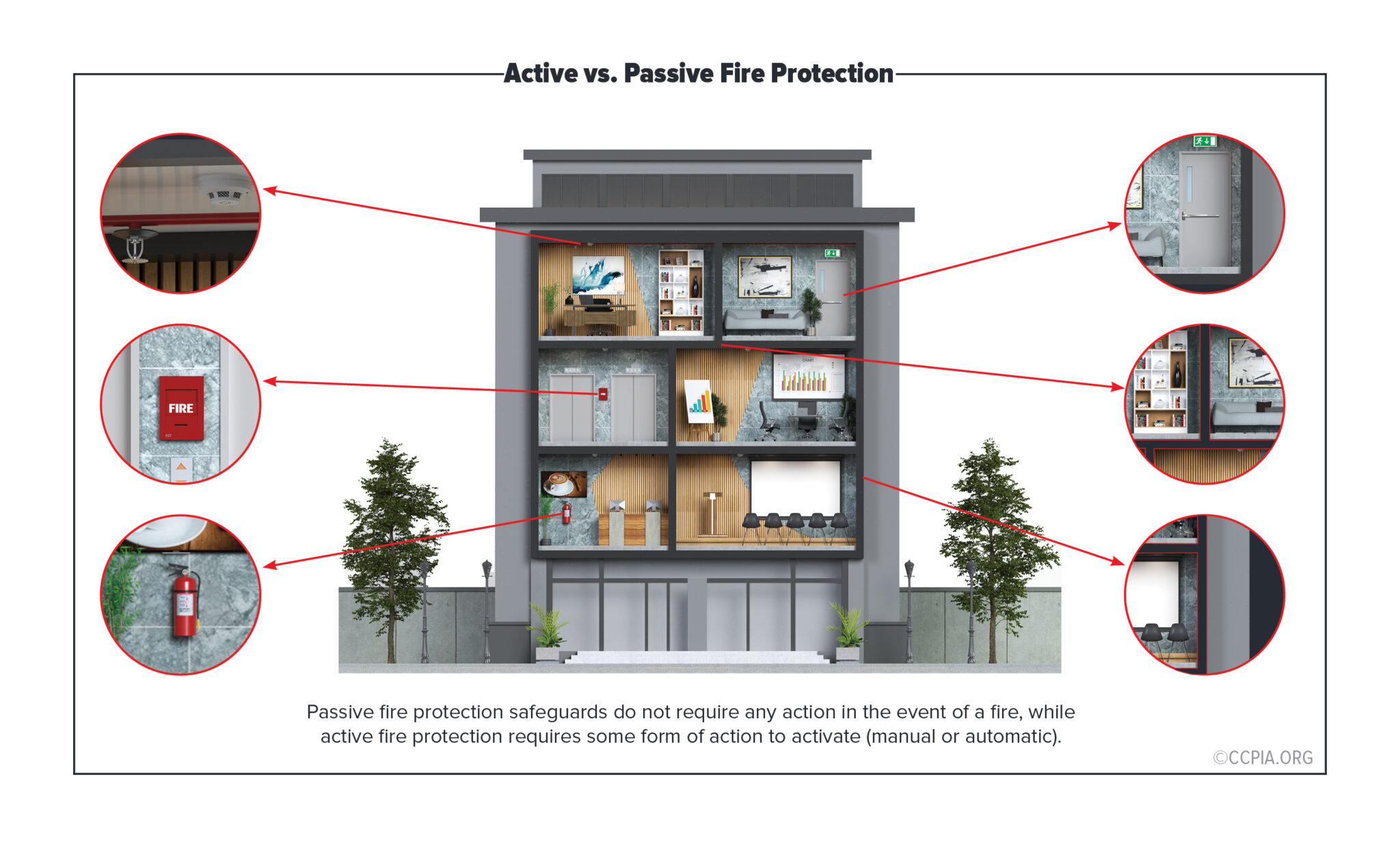
There are two types of fire protection in commercial buildings: passive and active. Passive fire protection refers to systems designed to contain fire and smoke without requiring any action, such as fire doors and fire-resistant walls. Active fire protection requires some form of activation, whether manual like fire extinguishers or automatic like sprinklers.
Means of Egress
The means of egress is a three-part system consisting of the exit access, exit, and exit discharge, designed as a form of passive fire protection through fire-resistive construction. Once an occupant enters this protected path, they must remain protected along the entire route. The means of egress begins at the corridor access door within the exit access, continues through the exit, and terminates at the exit discharge to the exterior.
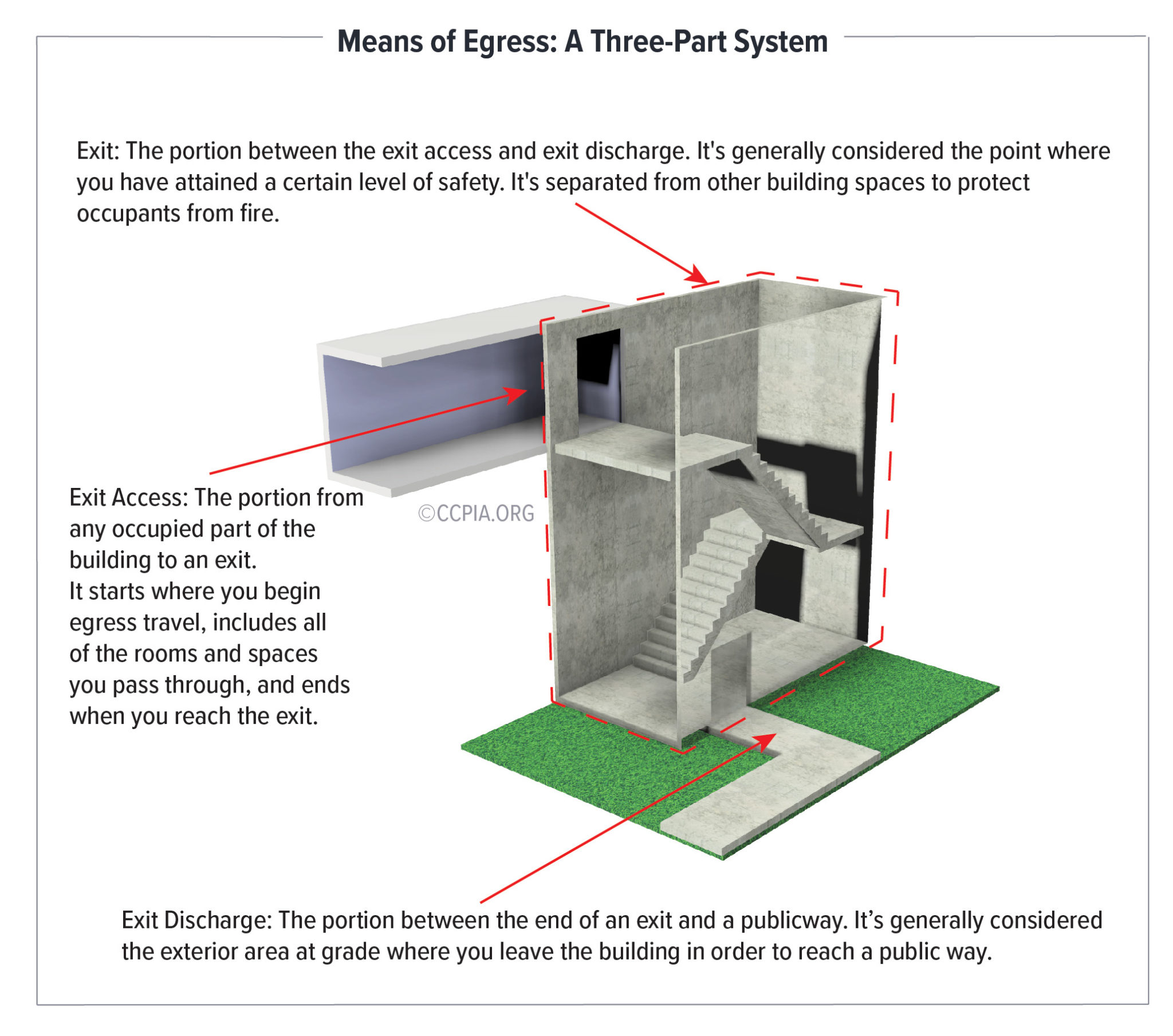
Any unprotected opening or penetration in fire-resistive construction compromises its ability to confine a fire and jeopardizes the safe egress of occupants during an emergency.
Corridors
Corridors serve as fire-rated pathways within the exit access portion of the means of egress. They are continuous from the point of entry to the exit and, although typically abutted by occupied spaces, should not be interrupted by intervening rooms. Since most commercial buildings require two different egress paths leading from the interior of a building to the exterior at ground level, corridors are typically designed to provide two distinct exits.
The video above is from a hotel inspection. In this building type, the means of egress corridors are typically the hallways containing guest rooms, and lead to exit stairways at each end of the hallway.
The ComSOP baseline inspection scope for corridors includes:
- Inspect for penetrations in any walls or ceilings separating the exit corridors, firewalls, and/or exit stairways from the rest of the building.
- Determine if storage is potentially obstructing access corridors and other parts of the means of egress.
Understanding the three-part means of egress system is foundational to performing a commercial building inspection. The Inspecting Commercial Fire and Life Safety Systems Online Course covers the complete inspection scope. Take the self-paced course to learn how to inspect various types of fire-resistive walls, exit doors, fire doors, stairways, exit signs, emergency lighting, and active fire protection elements, including sprinkler systems, fire extinguishers, fire alarms, and more.