


The interior exit stairway shown in the video is from a high-rise office building inspection. In addition to providing access to the roof, as shown in the Roof Access Stairways Inspection Video, it is a critical fire and life safety component. As part of the means of egress, interior exit stairways must include specific safety features and design elements related to risers, treads, handrails, guardrails, etc. The focus of this video and article is illumination via emergency lighting and safety-grade tape.
The ComSOP requires inspectors to assess various aspects of the means of egress and associated stairways, including the presence of emergency lighting systems and reporting when those systems appear aged or damaged. Although the exit stairway shown in the video had permanently installed emergency lighting, it did not provide sufficient illumination, according to the facility manager’s notes from the AHJ. For that reason, the building was required to install safety-grade luminescent tape.
The safety-grade luminescent tape was installed in two exit stairwells from ground level to the roof access point at handrails, outlines of landings, and edges of treads. Note most commercial buildings are required to have at least two exits to the outside, and in high-rise or multi-level buildings, these are often interior or exterior stairwells. The facility manager for this property stated that it cost over $80,000 to have a company install this taping.
To learn more about inspecting commercial interior exit stairways and emergency lighting, take the self-paced Inspecting Commercial Fire and Life Safety Systems Online Course and earn your certificate upon completion.
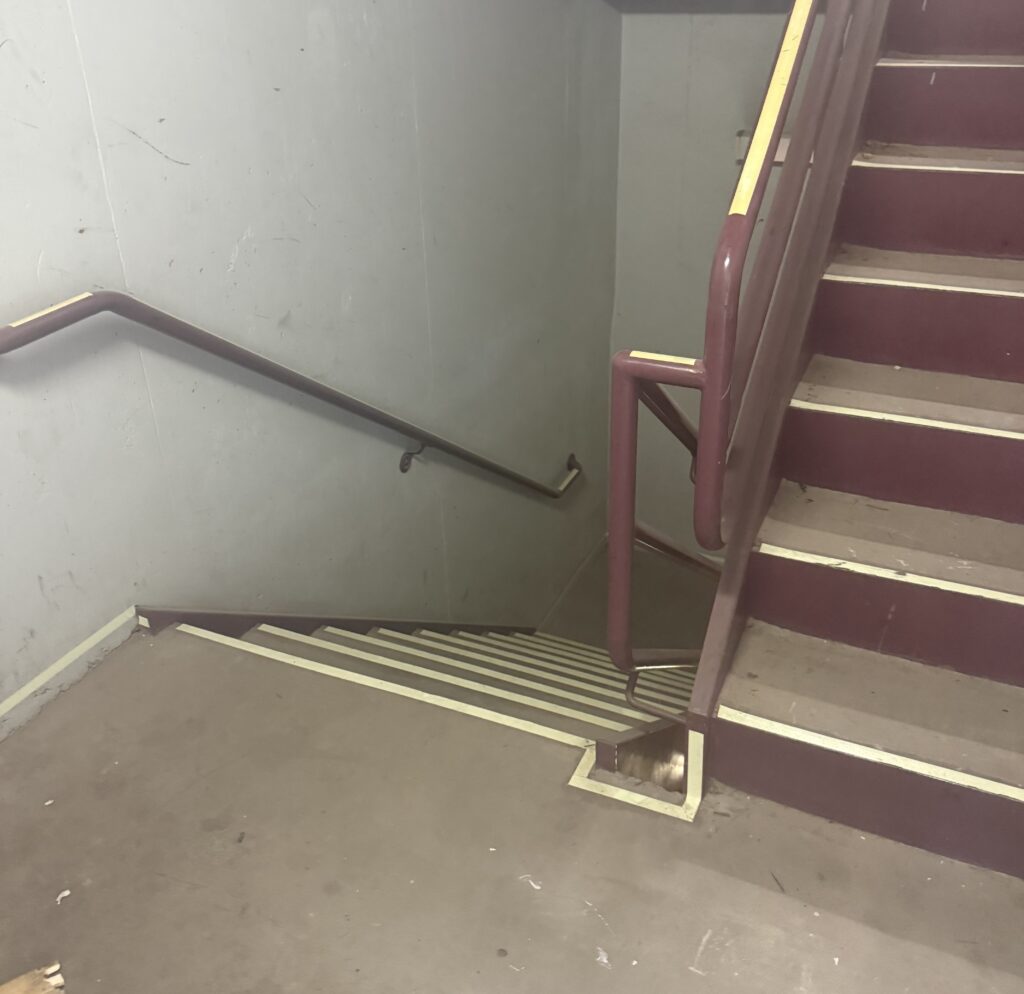
Safety-Grade Luminescent Tape
Understanding Illumination and Inspection Scope
When lighting fails or is insufficient, handrails, stair treads, and landings that are clearly visible under normal conditions can become obstacles in low or zero visibility. This can be extremely dangerous during an emergency. The AHJ is responsible for determining if illumination is sufficient. As a basis, they require continuous illumination at certain foot-candles (fc) for a set amount of time. Foot-candles are a unit used to represent light intensity on a one-square-foot surface from a uniform source of light.
Determining sufficient illumination is beyond the scope of a commercial property inspection. Instead, the inspector should confirm the presence of illuminated emergency lights and exit signs, and identify any trip or safety hazards that could hinder safe egress. Refer to the International Standards of Practice for Inspecting Commercial Properties (ComSOP) details for additional information about the baseline scope.
Performing a preliminary walk-through with the facility manager for this building inspection provided valuable insight. Inspectors should implement pre-inspection workflows to help prepare for the on-site inspection, such as using a pre-inspection questionnaire to coordinate access to areas and identify an on-site point of contact to interview for background information about the subject property, such as maintenance or facility personnel.
Inspector Takeaway
When inspecting interior exit stairwells, confirm that illumination is present throughout the entire stairwell, from the top floor to the exit at ground level. Assess emergency lighting, backup power sources, and exit signs, and document any supplemental measures observed, such as luminescent tape, in the report.
Learn more by taking CCPIA’s Inspecting Commercial Fire and Life Safety Systems Online Course. It is a self-paced course that covers essential information for inspecting means of egress and fire and life safety features in commercial buildings that protect occupants and the structure.