


When a building is four or more stories high with an occupied low-slope roof (less than 4:12 or 33% slope), at least one stairway will typically extend to the roof surface. In other cases, inspectors can expect stair access when the roof contains elevator equipment requiring maintenance. To learn more, take the Inspecting Commercial Low-Slope Roofs Online Course and earn your certificate upon completion.
The video above is from a 12-story office building inspection and reviews key planning steps to ensure roof access at the time of the inspection, visual checkpoints along stairways through secondary fixed ladders on the roof, and safety procedures. Note that a stairway consists of continuous flights of stairs with landings and platforms connecting them, while a fixed ladder refers to a permanent ladder securely fastened to a structure.
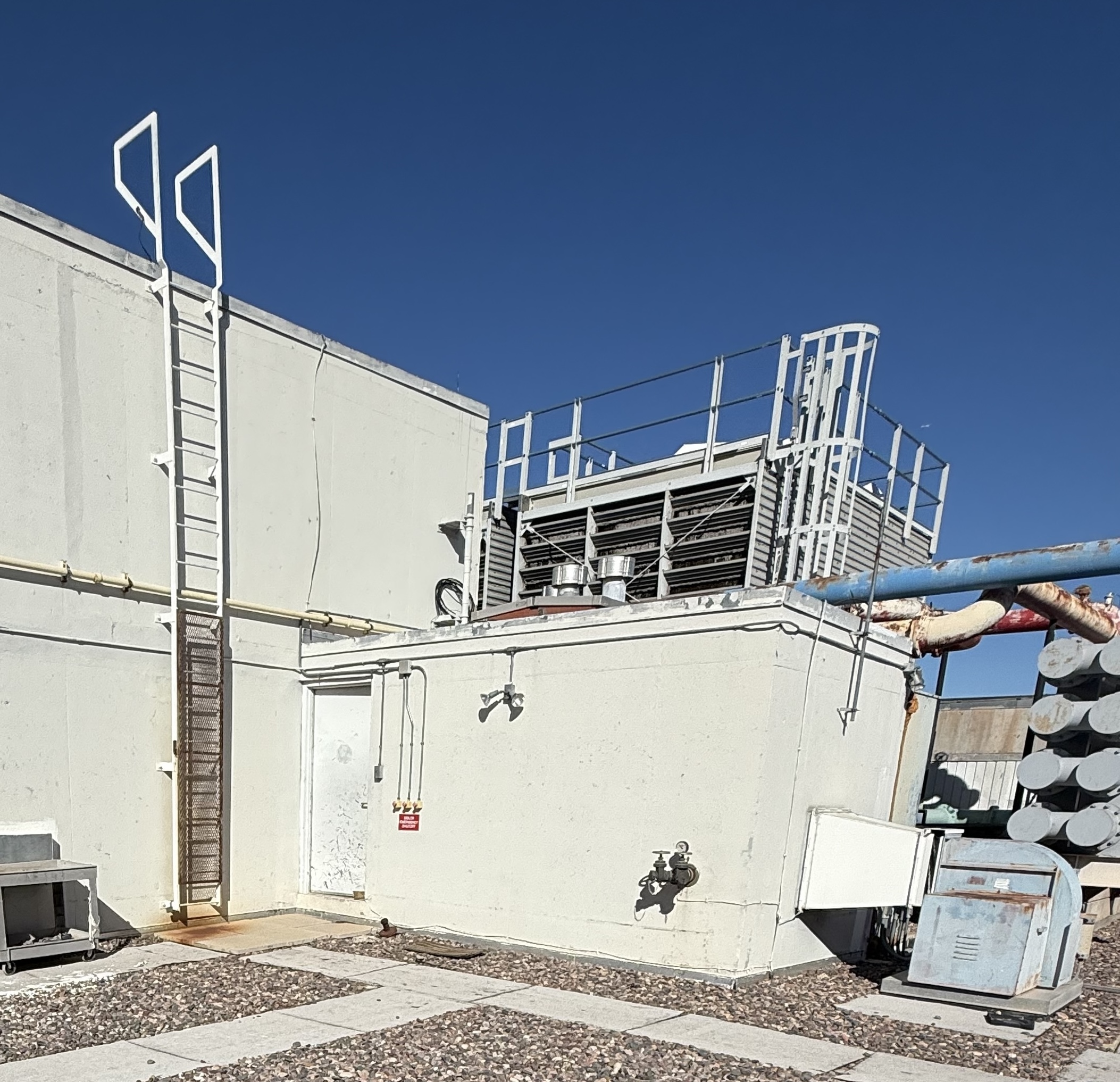
Roof view of access door and fixed ladder on penthouse
Stairway Access and Signage
The stairway leading to the roof often serves two purposes. It provides a means of egress in the event of an emergency and access for maintenance and service personnel. For safe egress, stairway identification signage is required at each floor landing when the stairway connects more than three stories. Signage should be installed around eye level and indicate whether roof access is provided through that stairway.
These stairway signage aspects relate to common code compliance requirements, but are not always implemented on-site.
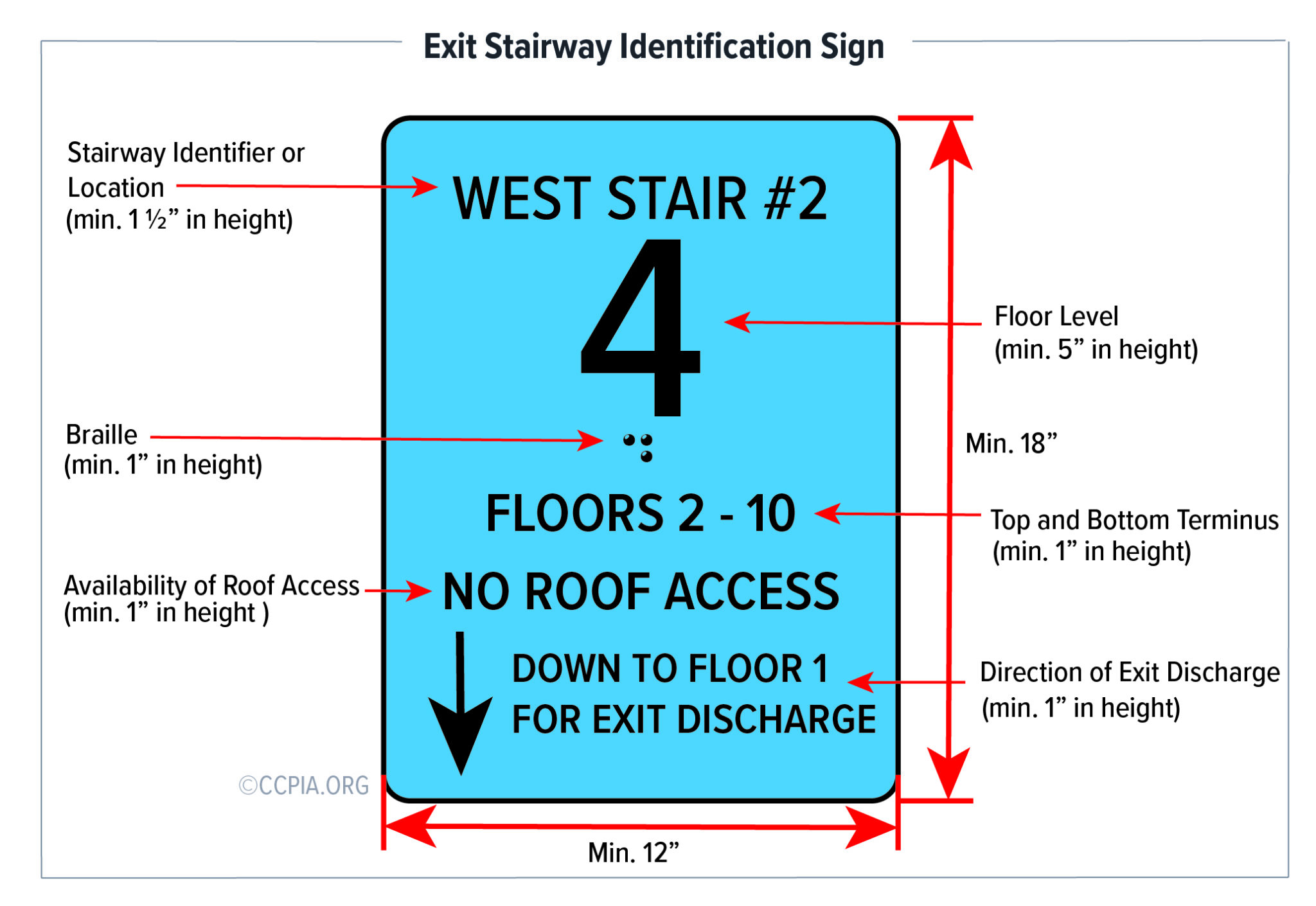
The doorway to the roof is typically locked. Before the inspection, ask the client for an on-site point of contact to assist with access limitations, and consider additional roof access needs, such as a penthouse or locked fixed ladders. Many inspectors send a pre-inspection questionnaire to their client once the agreement is signed to coordinate special access needs. Confirm that preparation aligns with what is observed on-site during the preliminary walkthrough.
Safety Considerations
When a doorway leads to the roof, the stairway platform and roof surface are typically not flush due to a raised curb at the threshold. This curb can present a tripping hazard but is necessary to help prevent water intrusion during heavy rain. Before stepping on the roof, look down as a safety precaution, and assess the physical condition of the door.
Note any door operation issues and signs of rust or deterioration. In wet climates, the absence of a curb at a roof access doorway can be a potential item of interest for the report, as it provides a pathway for water to enter the building and contribute to accelerated door deterioration.
Additional Roof Levels and Fixed Ladders
An important limitation of commercial property inspections is that areas not deemed readily accessible are excluded from the baseline scope. This includes areas that cannot be safely observed without the use of portable ladders. When additional levels are present on the roof, inspectors must determine a safe approach.
For example, building codes require a permanent means of access for climbs exceeding 16 feet in height, while OSHA requires a stairway or ladder at all worker access points where there is a break in elevation of 19 inches. Since inspectors are not required to carry portable ladders, this becomes a safety decision for the inspector and scope discussion between the inspector and client.
If fixed ladders are present, confirm the ladder is free of corrosion, cracks, or broken rungs, securely attached to the building, and extends beyond the roof surface to allow safe dismounting. Use appropriate PPE including a harness and tie-offs, and secure a C-clamp on the hatch to prevent it from closing while you are on the roof.
Learn more how to safely use fixed ladders and how to inspect fixed ladders for potential safety issues in the Fixed Ladder Inspection and Safety Online Course. This is a self-paced course included with CCPIA® All-Access Membership and provides a certificate upon completion.
Inspector Takeaway
Before the inspection, it’s important to conduct preliminary research and maintain an open line of communication with the client to understand what to expect during the inspection, identify potential access limitations ahead of time, and coordinate special access as needed.
Any portions of the roof that could not be accessed must be documented as a limitation in the report. Assessing higher levels from the roof surface or using a drone are alternatives when access limitations or safety concerns are present. Drone use requires additional training and insurance coverage.
Learn more about roof access procedures, fixed ladder safety, and low-slope roof defect recognition in the Inspecting Commercial Low-Slope Roofs Online Course. It is a self-paced course that covers roof systems and components, access methods, and inspection procedures.