


Cooling towers are components of a building’s central HVAC system. At a basic level, cooling towers reject building heat through water evaporation. These systems involve a building water loop and a cooling tower loop. What varies between systems is how heat is moved between these loops and what equipment is used.
Learn more in the Commercial HVAC Systems Online Course. It is a self-paced course that covers different HVAC systems and components, as well as designs and critical safety practices.
Chiller Water System
Most cooling tower systems are paired with chillers. All chillers serve the purpose of removing heat from water. In this type of system, the chiller sits between the two loops. The chilled water loop (building side) uses the chiller to cool the water. That cooled water circulates through the building to remove heat from the air, then returns to the chiller warm to be cooled again. On the condenser water loop (tower side), the chiller dumps the heat it collected from the building side into this loop. That warm water travels to the cooling tower, gets cooled, and returns to the chiller’s condenser. Learn more about this type of system in the How Chillers and Cooling Towers Work Together video.
Water Source-Heat Pump System (WSHP)
The building in this video does not use a chiller. Instead, it’s a water-source heat pump system, but with the same two-loop configuration. The closed loop (building side) circulates cool water through the building, connecting to each suite’s heat pump. The open loop (tower side) includes the water pumps, heat exchangers, and the cooling tower. Pumps pull water from each floor across the heat exchangers, which transfer heat before the water cycles back to the cooling tower where it is expelled to the atmosphere.
Inside the cooling tower, water cascades down a series of cells (fill media) where it is broken into fine droplets, atomizes, and releases heat to the atmosphere through evaporation. By the time the water reaches the bottom of the cooling tower, it has cooled and is pumped back through the building to act as the catalyst for moving heat from the interior to the exterior.
Although the fill media is located inside the tower, inspectors can typically view it through the louvers on the side of the unit. Mineral scale buildup on the louvers in front of the fill media is a maintenance item.
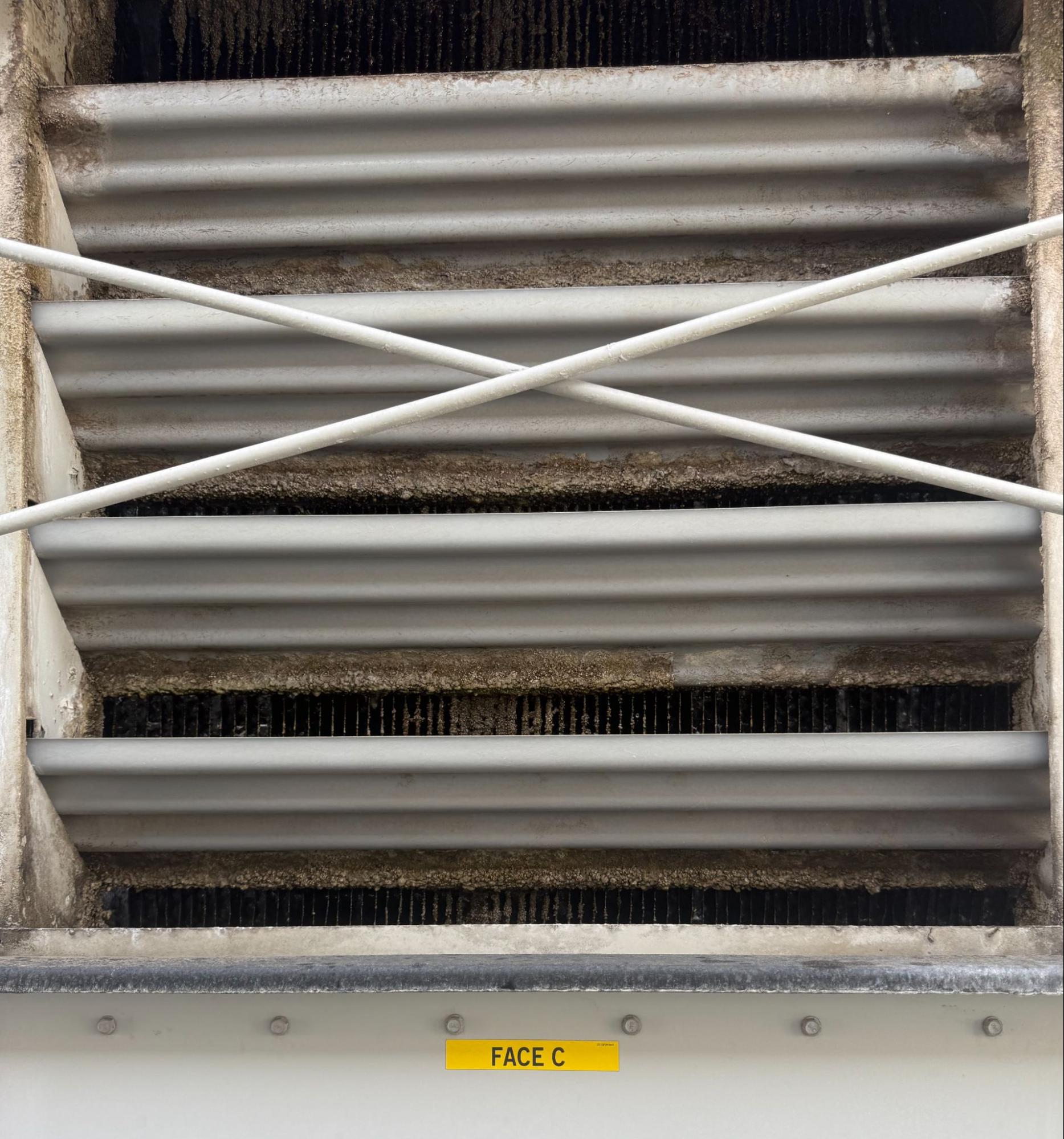
Cooling tower fill media and louvers
WSHP System Key Components
Water Pumps
A series of pumps and motors are located on the exterior of the cooling tower. These components pull water back from each floor of the building and push it across the heat exchanger. Document the labels, listen for unusual noises, and look for signs of excessive vibration. Check the electrical connections and pipe connections for signs of leakage or corrosion.
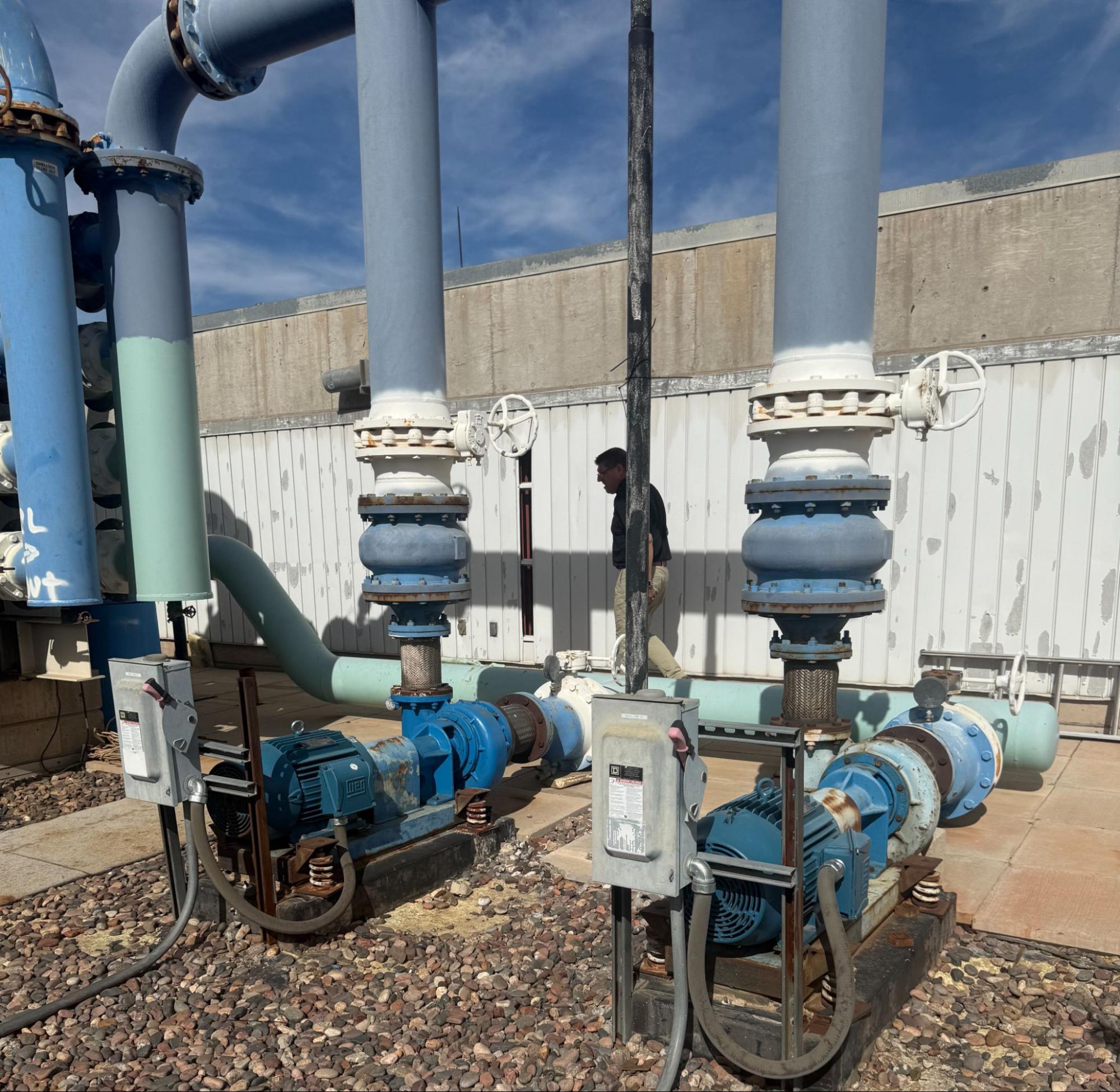
Water pumps and motors
Heat Exchangers
The heat exchanger uses a series of tubes to transfer heat from the closed building loop to the open tower loop. That heated water then travels to the cooling tower where heat is expelled to the atmosphere. In the video, these are the grey tubes between the water pumps and cooling tower. Document the labels and visually assess the unit’s physical condition.
Heat Pumps
Individual heat pump units within each building suite connect to the closed-loop piping to condition the air in each occupied space. These units extract heat from the loop to provide heating or reject heat into the loop to provide cooling depending on occupant demand.
The video above is from a 12-story office building inspection. Heat pump units were located on each floor and within individual suites, concealed above drop ceilings. Inspectors may choose to bring a ladder and move ceiling tiles to access a unit, but this is not required. Speaking with the building engineer prior to the inspection can provide useful insight into unit locations and how cooling systems at different properties are designed to operate.
The image below shows the white-box space at the lowest level of the building, where the only heat pump was visible during this inspection.
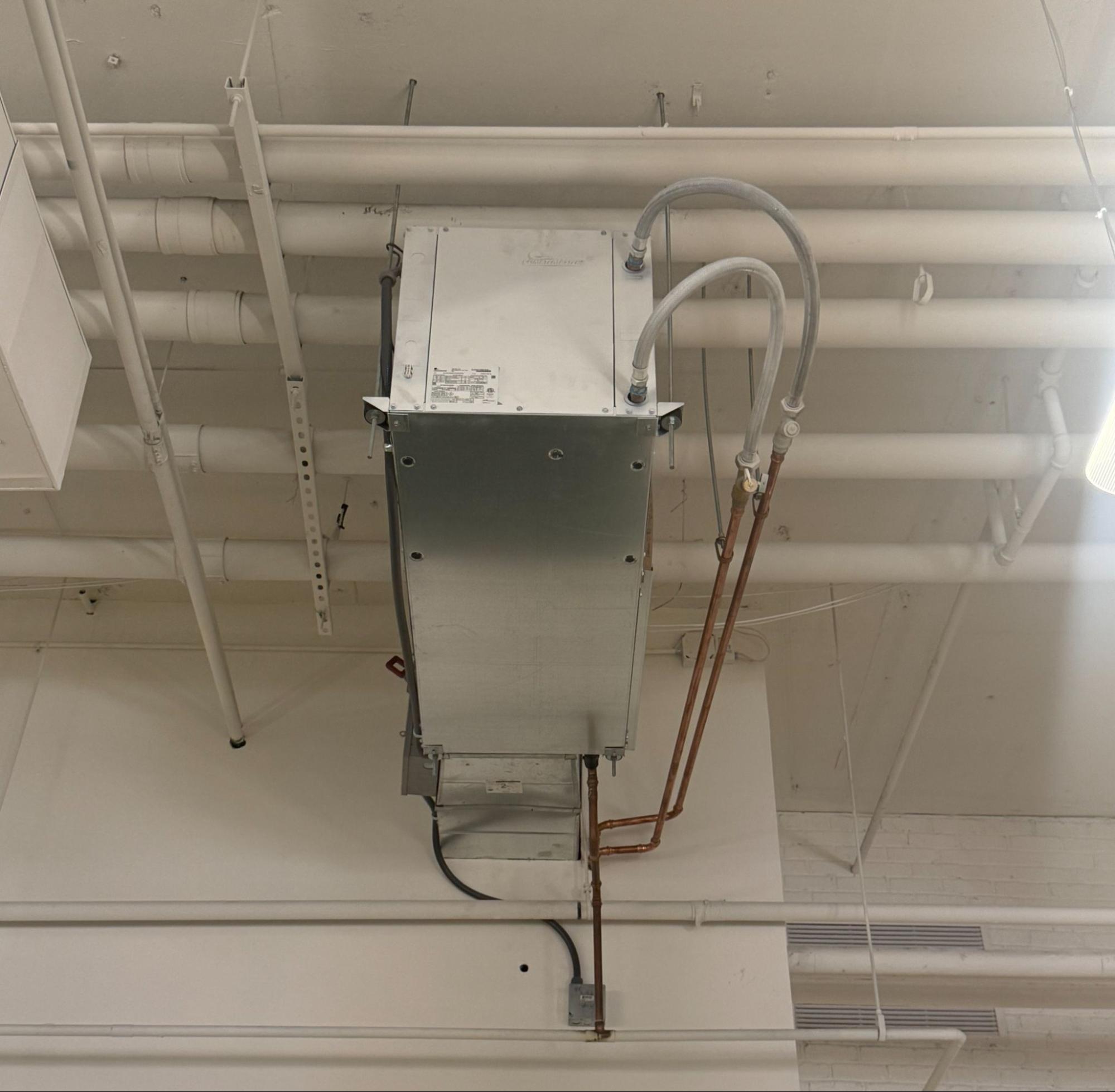
Heat pump
Backflow Prevention Device
Cooling towers require a dedicated backflow preventer on the makeup water line. Since the open loop is exposed to the atmosphere and treated with chemicals to control biological growth, it poses a cross-connection risk to the potable water supply. The backflow preventer protects against contaminated tower water flowing back into the building’s domestic water system. Locate the device and document any inspection tags present.
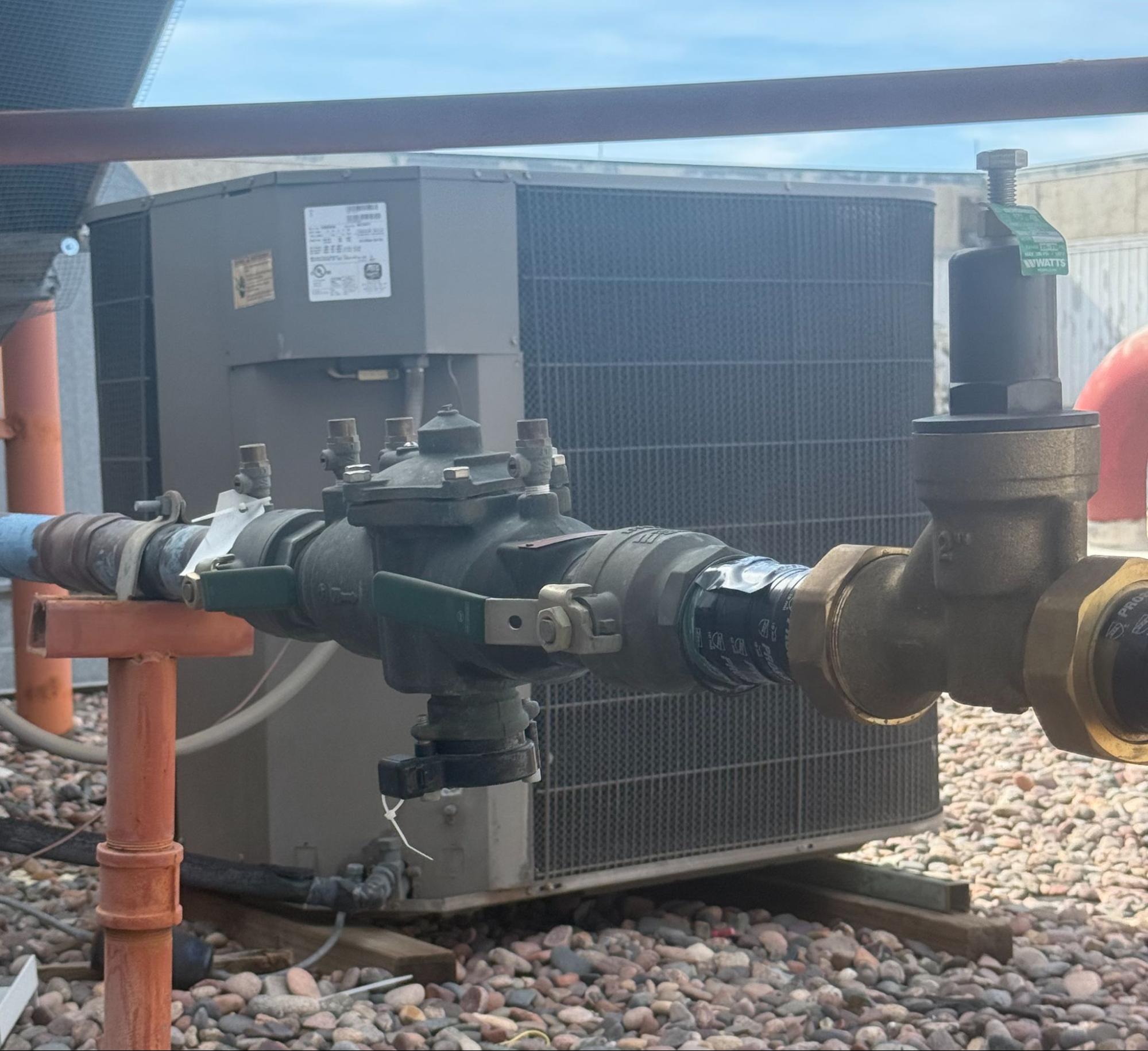
Cooling tower backflow preventer
Commercial Property Inspection Limitations
Cooling towers are complex systems. Before every inspection, inspectors should have an understanding of the systems and components present. If a cooling tower is present, discuss with your client whether a visual overview and inventory of systems and components will suffice, or whether a specialty consultant is needed for a more comprehensive assessment. A specialty consultant can better provide insight into operational concerns and deferred maintenance.