


Chillers and cooling towers work in tandem. The chiller removes heat from the building’s water, and the cooling tower rejects that heat to the atmosphere. All chillers serve the purpose of removing heat from water, but they various types differ in how the compressor moves refrigerant and where they’re typically used. At the recreational facility in the video, a centrifugal chiller is located in a mechanical room, with the cooling tower installed at grade outside. The core components and central plant functionality are reviewed in the video and explained in more detail below.
Check out our self-paced Inspecting Commercial HVAC Systems Online Course to learn more.
Chillers
The following outlines the two water loops and the basic refrigeration process used by the chiller:
- Heat is absorbed in the evaporator as refrigerant surrounds water-filled tubes.
- Refrigerant vapor is compressed.
- Heat is rejected in the condenser through a separate set of water-filled tubes.
- Refrigerants are metered and reused.
Supporting this process are two primary components, including a compressor and pumps. The compressor is the heart of the system and maintains the low evaporator pressure required for refrigerant to boil at a low temperature. Once water is chilled, pumps circulate it throughout the building.
The chilled water pumps, connected to the chilled water return piping shown below, move water from the evaporator to the AHUs and VAV boxes and back to the chiller. The condenser water pump moves water from the condenser to the cooling tower and back to the chiller, serving the heat-rejection side of the system. Chilled water pumps are usually located in the mechanical room, while condenser water pumps may be located near the cooling tower.
Chilled water piping is insulated to prevent condensation and energy loss. Condenser water piping is often uninsulated or minimally insulated. To learn about the AHUs and VAV boxes at this property refer to the How Air Handling Units (AHU) Work video and Variable Air Volume (VAV) Boxes in Commercial Buildings video.
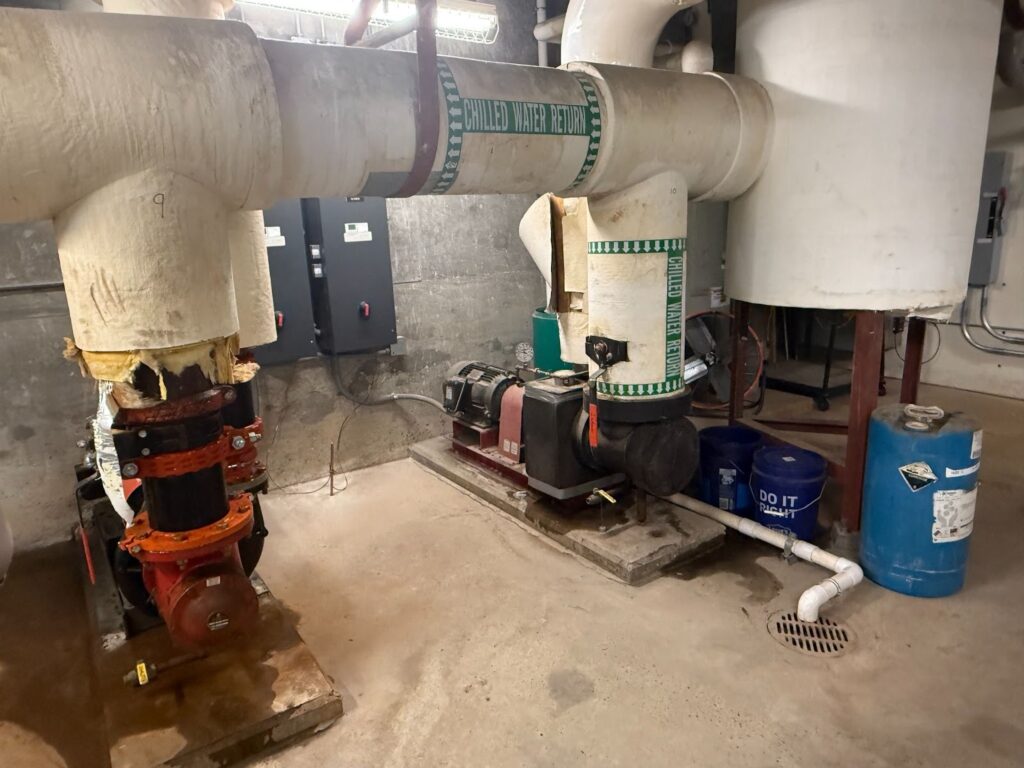
Chilled water pumps located in chiller mechanical room
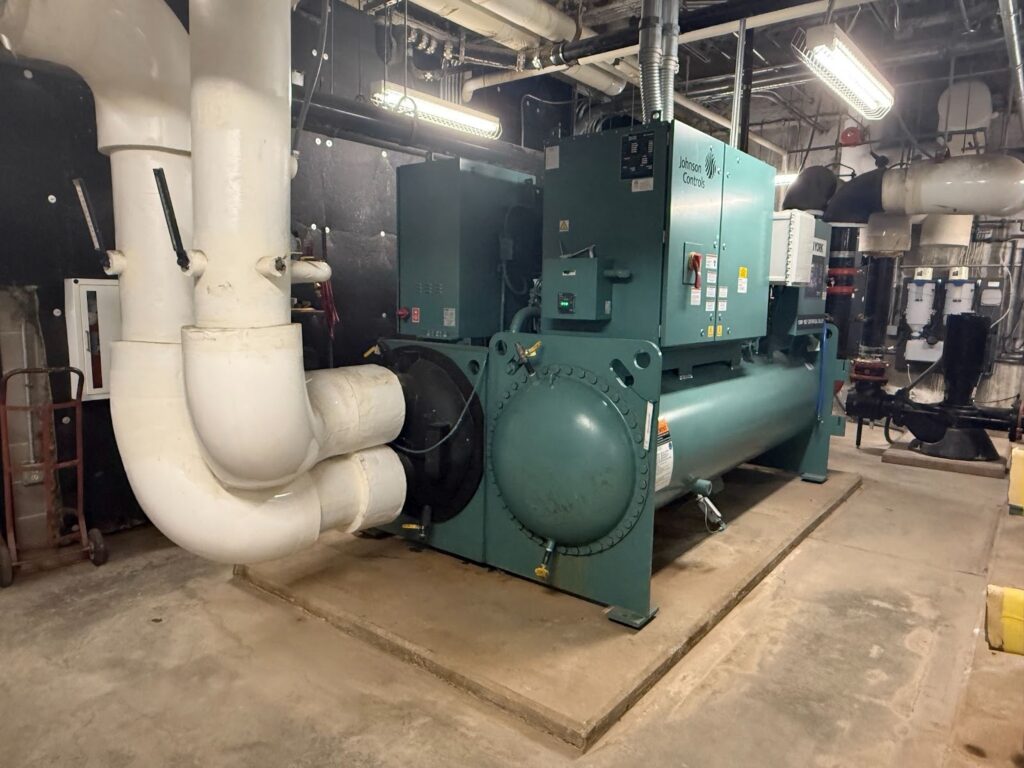
Chilled water supply and return connections serving the evaporator
Refrigerants
Refrigerant is needed because it can absorb, transport, and release heat efficiently by changing state between liquid and vapor. In the evaporator, a distributor trough spreads refrigerant evenly over the tubes. Dual refrigerant relief valves are installed on both the evaporator and condenser shells. These components are enclosed within the chiller and are not typically visible.
Inspectors should observe the chiller exterior for signs of refrigerant leakage, such as oil residue or staining. Refrigerant leakage is a hazardous condition and should be addressed by a qualified individual.
Cooling Towers
The cooling tower does not cool the building directly. It only cools the condenser water. Warm condenser water is pumped to the cooling tower, where heat is rejected through evaporation. Water passes through fill media while air is drawn across it, allowing a portion of the water to evaporate and carry heat away. The remaining cooled water collects in the basin and is pumped back to the condenser to continue the cycle. Refer to the video above for visual indicators of potential cooling tower issues.
The piping shown below is associated with the condenser water loop, located on the opposite side of the chiller from the chilled water loop. You can also see the service and drain piping associated with the chiller system that is routed to a floor drain.

Condenser water supply and return connections serving the cooling tower loop
Inspecting Chillers and Cooling Towers
Chillers and cooling towers are central plant systems. A thorough assessment often requires specialized knowledge and is typically beyond the baseline scope of a commercial property inspection. Inspectors should document their presence as part of the building’s inventory. The presence of a cooling tower also indicates that routine maintenance practices should be in place, as these systems can be associated with Legionella growth, which poses health risks to occupants if not properly managed.
At this inspection, the facility manager demonstrated the chiller’s control interface, which displays operating status and temperature data for the evaporator and condenser systems. During pre-inspection interviews, inspectors may consider requesting that individuals with the most knowledge of the property be available to answer questions or demonstrate system operation if this aligns with the client’s objectives. Inspectors should not operate control interfaces themselves; observing an active display only confirms that the system is powered and operating at the time of inspection.
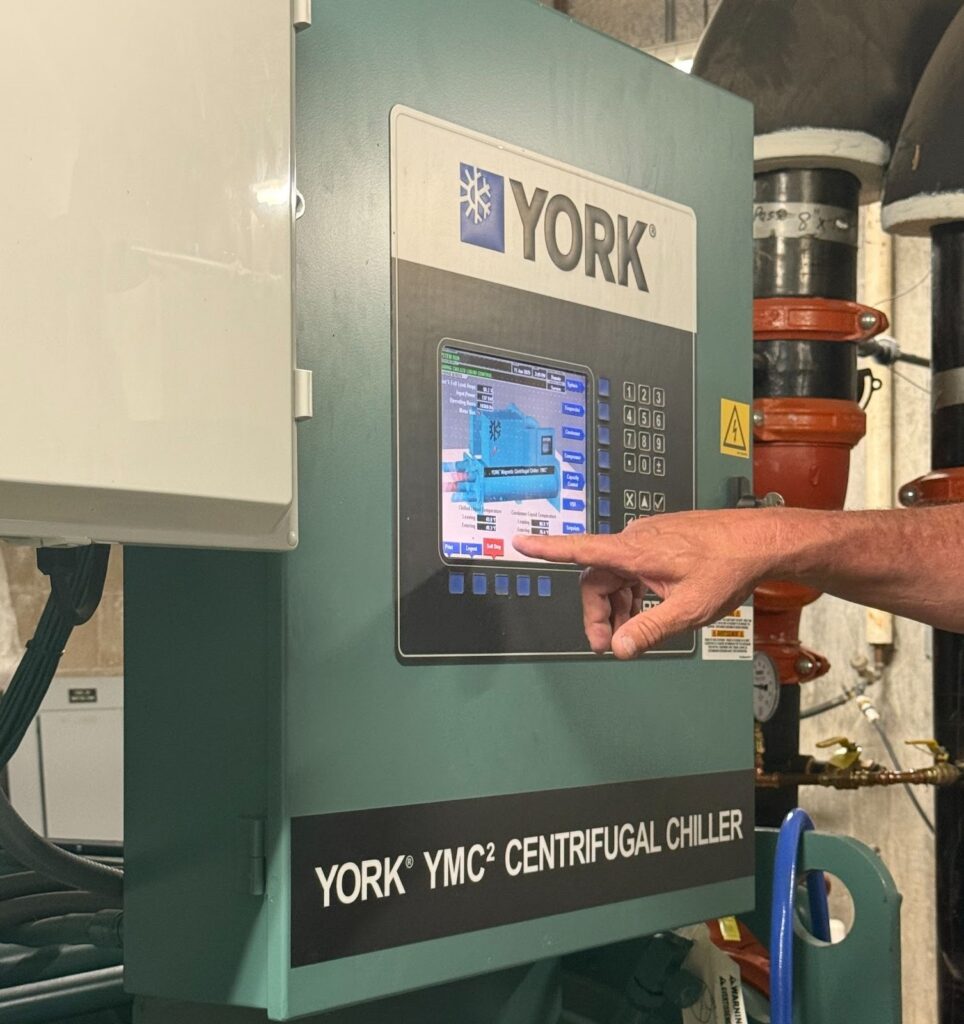
Control interface for single chiller unit
Commercial HVAC Inspection Training
Learn more about central plant systems in Inspecting Commercial HVAC Systems Online Course, which includes a downloadable coursebook, inspection checklists, and a certificate upon completion. The course also covers the most common systems within scope of a commercial property inspection, such as forced-air furnaces, rooftop units, hanging gas furnaces, infrared tube heaters, boilers, split systems, heat pumps, evaporative coolers, air-handling units, VAV boxes, make-up air units.