


Roof drainage is a critical system on low-slope roofs. Unlike steep-slope roofs, low-slope roofs have minimal pitch and rely on proper design to direct water to internal drains, scuppers, downspouts, or a combination of these components. Without proper design and maintenance, poor drainage can lead to accelerated deterioration and building leaks. To learn more about inspecting commercial roof drainage systems, take the self-paced Inspecting Commercial Low-Slope Roofs Online Course and earn your certificate upon completion.
The building shown in the video has an internal roof drainage system. No scuppers, gutters, or downspouts were present. Internal roof drainage systems provide limited visibility during inspections. The piping on the underside of the roof is often concealed within drop ceilings and other building finishes, where only signs of leakage are visible.
Common deficiencies inspectors should look for from the roof surface include:
- Clogged primary or secondary roof drains
- Absence of secondary (overflow) roof drains
- Broken, loose, or missing drain strainers
- Water or debris stains indicating ponding evidence
- Poor flashing between the roof covering and the drain
Roof Drainage Components
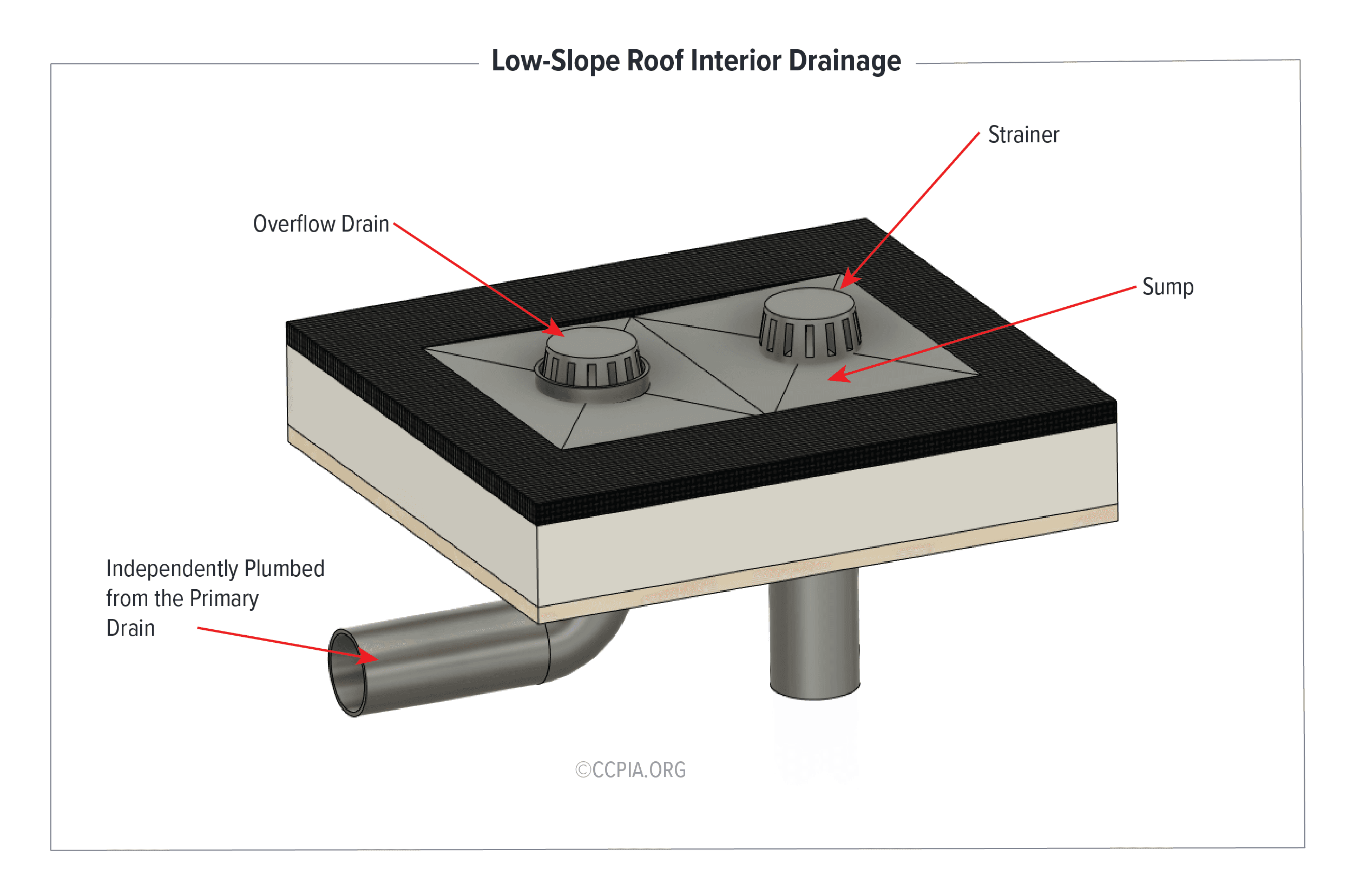
Primary and Secondary Roof Drains
Modern buildings with internal drainage systems require secondary drains. Secondary drains manage overflow during heavy precipitation or when the primary drain fails. The two drains are located next to each other, with the secondary drain installed approximately 2 to 4 inches above the primary drain. The building shown in the video is older and also located in an arid climate, so secondary drains were not present.
Drainage Screens
The drainage screen is a critical component to assess. Broken, loose, or missing screening allows debris such as ballast or river rock to enter the drain pipe, potentially causing obstructions that render the drain ineffective.
When screens are missing, the roof drains and vents can look similar. Inspectors should take a closer look at the pipe to determine whether it is a drain or a vent by checking for a recessed basin (sump) or signs of a missing drain screen.
Interior Drain Tracing
A roof drain failure can manifest as a leak on any level below. Since internal drainage systems carry water through the interior of the building to groundlevel, inspectors should trace drain paths through all stories of the building to identify moisture, staining, or water damage on each floor along that path.
Inspectors are not required to move ceiling tiles. Look for surface stains or use an infrared camera to identify potential moisture issues.
Commercial Property Inspection Limitations
Inspectors are not required to examine inaccessible piping, but they should document all visible evidence of water damage and drainage deficiencies in the report. Recommend further evaluation by a qualified plumbing or roofing contractor when concerns are identified.
Learn more about inspecting low-slope roofs in the Inspecting Commercial Low-Slope Roofs Online Course. It is a self-paced course that covers the most common low-slope roofing materials, designs, installation and repair practices, and how to identify and report on defects and drainage components in accordance with the ComSOP.