


Leased commercial spaces are rarely delivered fully finished. Landlords will often provide some infrastructure, while tenants complete improvements to meet their operational needs. For example, a brewery typically requires extensive plumbing and, if food service is offered, commercial kitchen equipment. An office space may only require specific electrical distribution, partitions, and flooring.
There are various terms used to describe space conditions delivered by construction companies and property owners or managers, ranging from base structure with minimal utilities to turnkey fully finished spaces. White box is the term used to describe a middle-level condition between those extremes.
| CRE Term | Space Condition Meaning |
|---|---|
| Cold Dark Shell | Bare structure with limited utility services, exposed structural elements, and no finishes or lighting. Requires full interior construction. |
| Grey Shell | Basic building systems and utilities installed with exterior walls finished and concrete floors. HVAC units may be present but not connected. Requires most interior construction. |
| White Box | Basic building systems and utilities installed and functioning, such as HVAC units, electrical outlets, and lighting. Walls are often drywalled and painted white. Requires custom layout, branding, and specialty finishes. |
| Turnkey Space | Fully finished space ready for occupancy, including office partitions, flooring, lighting, HVAC, and restrooms. Requires minimal changes before occupancy. |
Inspectors may encounter these terms in client conversations, property listings, and when working with specialty consultants. Understanding them sharpens proposals and site visit preparation. To find an inspector who can assess space conditions for operational needs, visit the directory and connect with a CCPIA® Certified Commercial Property Inspector.
Inspecting White Box Spaces
Leased commercial spaces are turned over quickly as landlords work to minimize vacancy. For inspectors, this can mean multiple contractors working under tight timelines, and the clean look of a white box shouldn’t be taken at face value.
Inspecting a white box space has both advantages and disadvantages. The predominately white finish can make issues easier to identify, but issues can also be created or concealed by fresh paint or the replacement of ceiling tiles and other finishes during the build-out process. Inspectors should check for construction defects or oversights from the build-out process, including paint applied to electrical receptacles, sprinkler heads, or fire door and other equipment labels.
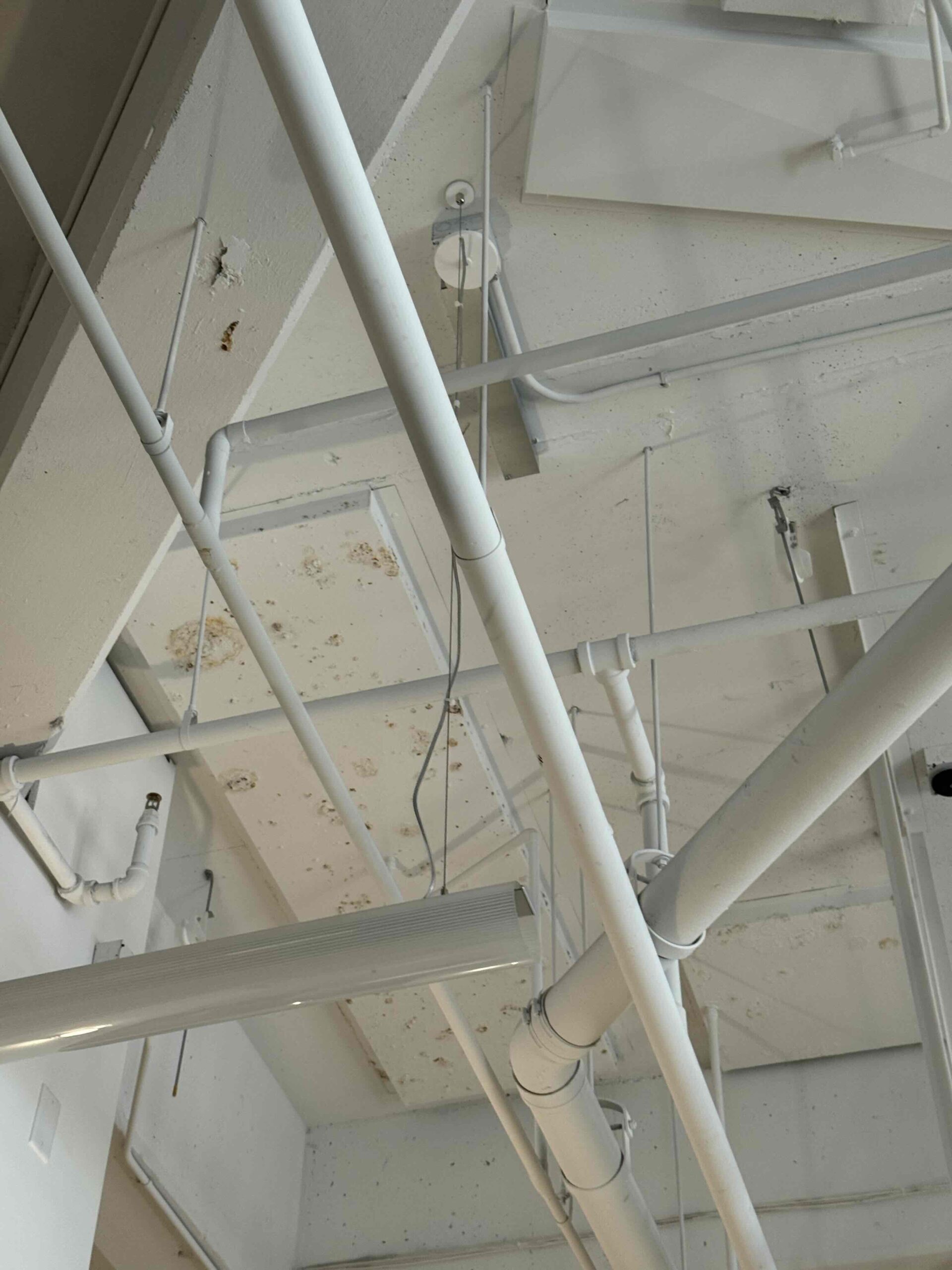
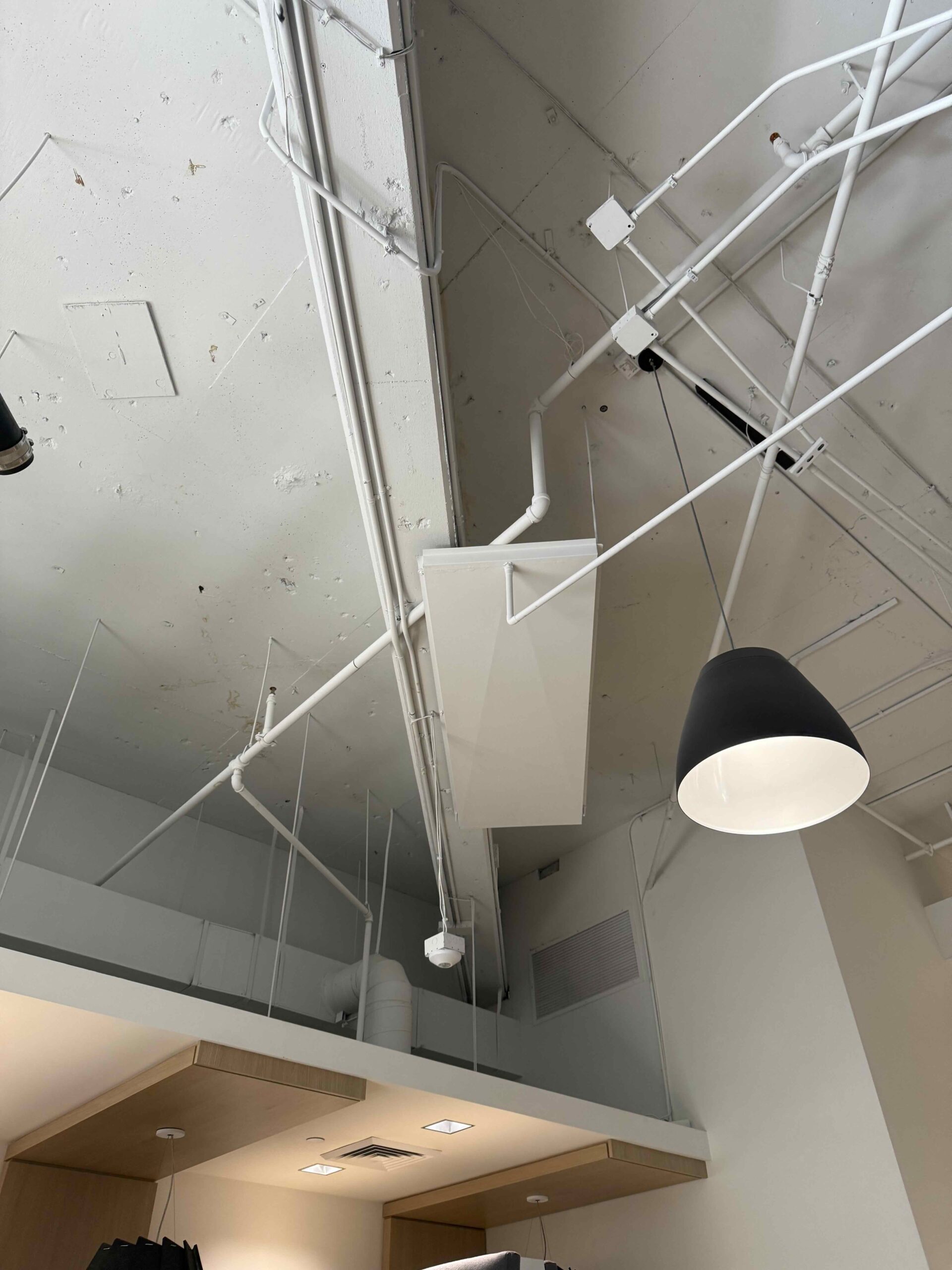
The office building shown in the video above was originally leased as a white box space. The interior was painted white, and the critical systems and components were installed and operational. The tenant completed minimal improvements before occupancy.
During the inspection, signs of active leakage were observed, including rusting and staining on the ceiling and adjacent components. Drip pans were installed after occupancy as a temporary fix to collect water from leaks and condensing equipment.
Proposal Workflow
Thorough preliminary research and client consultations are an important part of the proposal workflow process. A prospective client could be considering a space where improvements are still planned, while another may be interested in a turnkey space ready for occupancy. This can directly affect the scope of an inspection. Start with the baseline scope of the ComSOP when preparing inspection fees and proposals, then adjust the scope based on client objectives and the condition of the subject property.
For example, a gray shell space, or one that still requires substantial interior construction, can reduce the scope of the inspection. Systems and components may not be installed or operational yet, and the means of egress may not be established until walls, partitions, and tenant improvements are completed. In these situations, inspectors should clearly communicate limitations and recommend a follow-up inspection before the tenant occupies the space once construction is complete.
For more information about inspecting commercial buildings, assessing property conditions, and optimizing your proposal workflow process, refer to the online course library. The various self-paced courses included in a CCPIA® All-Access Membership cover the ComSOP scope, specific building systems, and the preparation of proposals and inspection fees.