


Life Safety Inspection Overview
Compared to single-family homes, commercial buildings are uniquely designed and constructed with fire and life safety elements intended to protect the structure, occupants, and emergency responders. Inspectors must follow a Standards of Practice designed for commercial buildings that accounts for this, ranging from means of egress to specialized fire systems.
The video above demonstrates a life safety inspection in accordance with the International Standards of Practice for Inspecting Commercial Buildings (ComSOP), from the publicway throughout the building’s interior. Refer to Section 6.5.12 of the ComSOP for inspection scope and Section A.4.12 for reporting guidelines.
Exterior of the Building
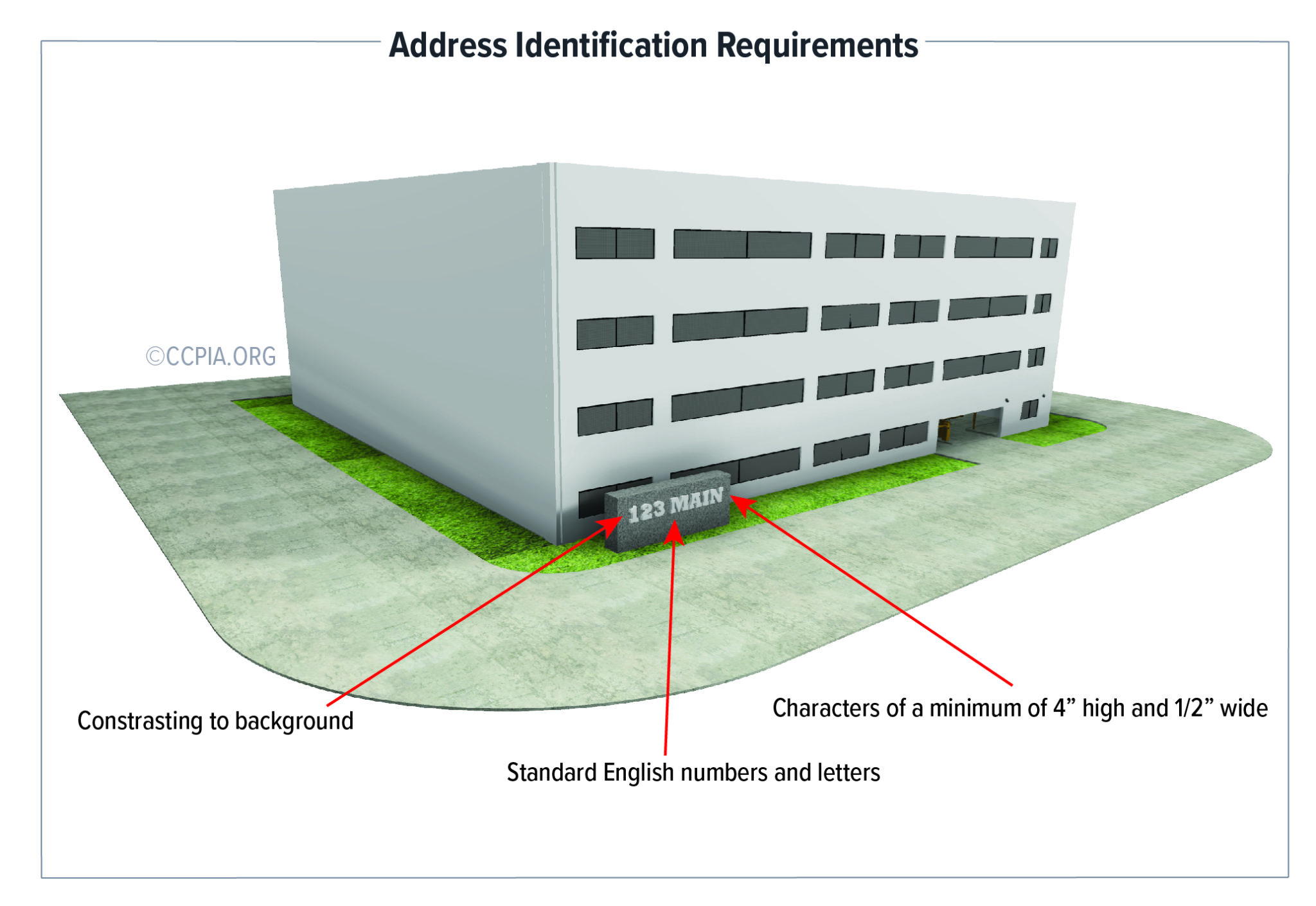
The life safety portion of an inspection begins the moment an inspector arrives onsite. Check that the street address or building number is clearly visible and displayed in contrasting colors to aid emergency responders in locating the building.
Check for fire access road obstructions, such as overhead wires lower than 13 feet and 6 inches. Both the fire access road and fire lanes should have clear maneuverability space, allowing emergency vehicles to approach within 50 feet of an exterior door upon arrival. Ensure fire hydrants are readily accessible with at least 3 feet of clearance around them. Note overgrown vegetation or other obstructions.
Approaching the Building
Before entering a commercial building, the perimeter walk tells the inspector what fire and life safety systems are present and where access coordination will be needed. For example, locked doors labeled “Fire Sprinkler Room” or “FACP” for fire alarm control panel indicate that access coordination with an on-site point of contact is needed to complete the life safety portion of the inspection. It also indicates that sprinkler heads and fire alarm system components should be assessed during the interior walk-through.
Other features you may encounter include Fire Department Connections (FDCs), Knox Boxes (wall-mounted key safes for emergency responder access), and obstructions or trip hazards at exit doors, stairways, and other exit discharge points. A key part of the inspection is providing the client with an inventory of features present and documenting anything that compromises occupants’ safety.
Interior of the Building
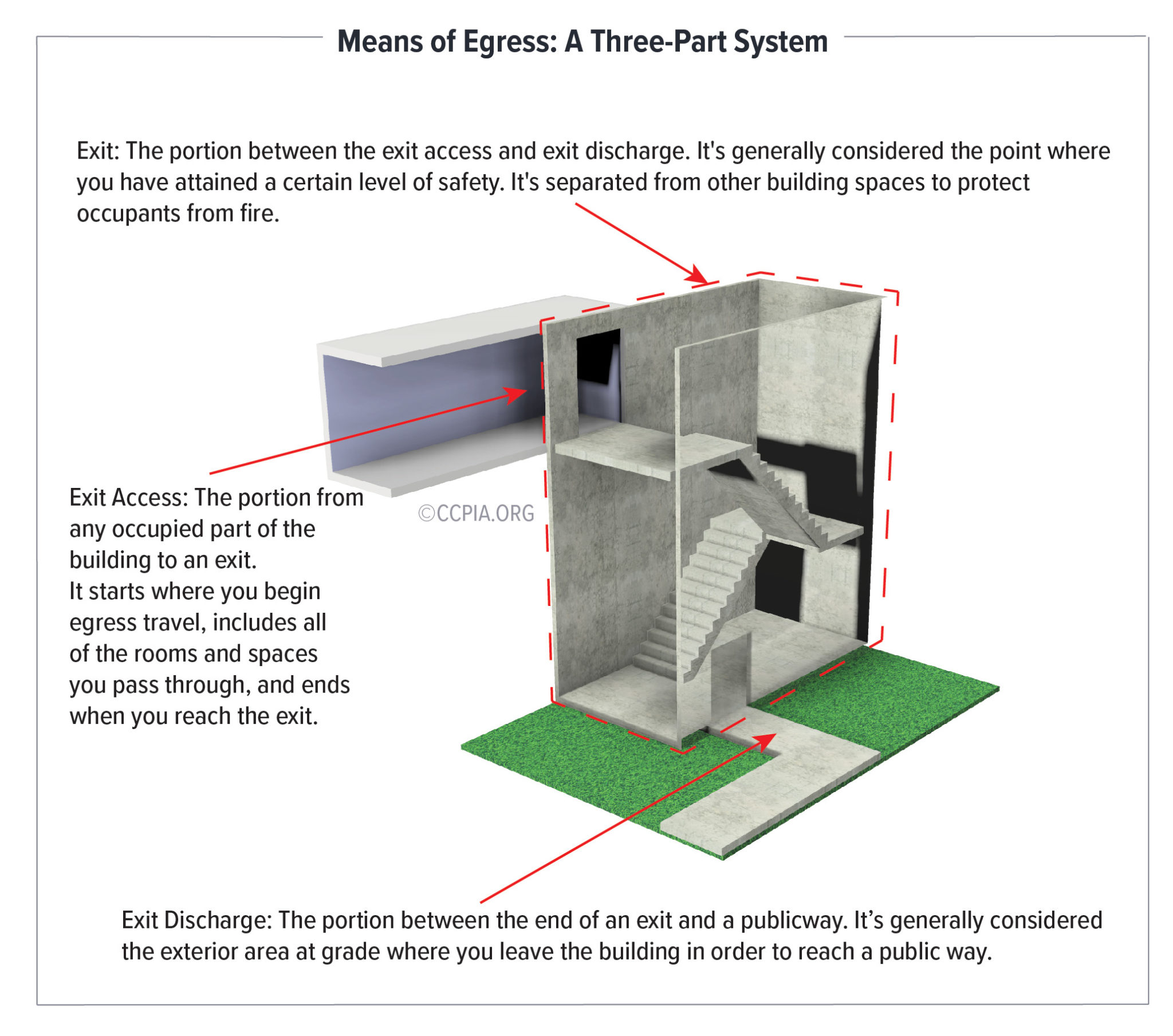
Entering the building, begin tracing the means of egress path. Look for emergency evacuation maps posted at the entryway. You’ll gain insight into the mapped escape routes for occupants and sometimes the location of features, such as fire extinguishers, fire doors, and interior control or pump rooms.
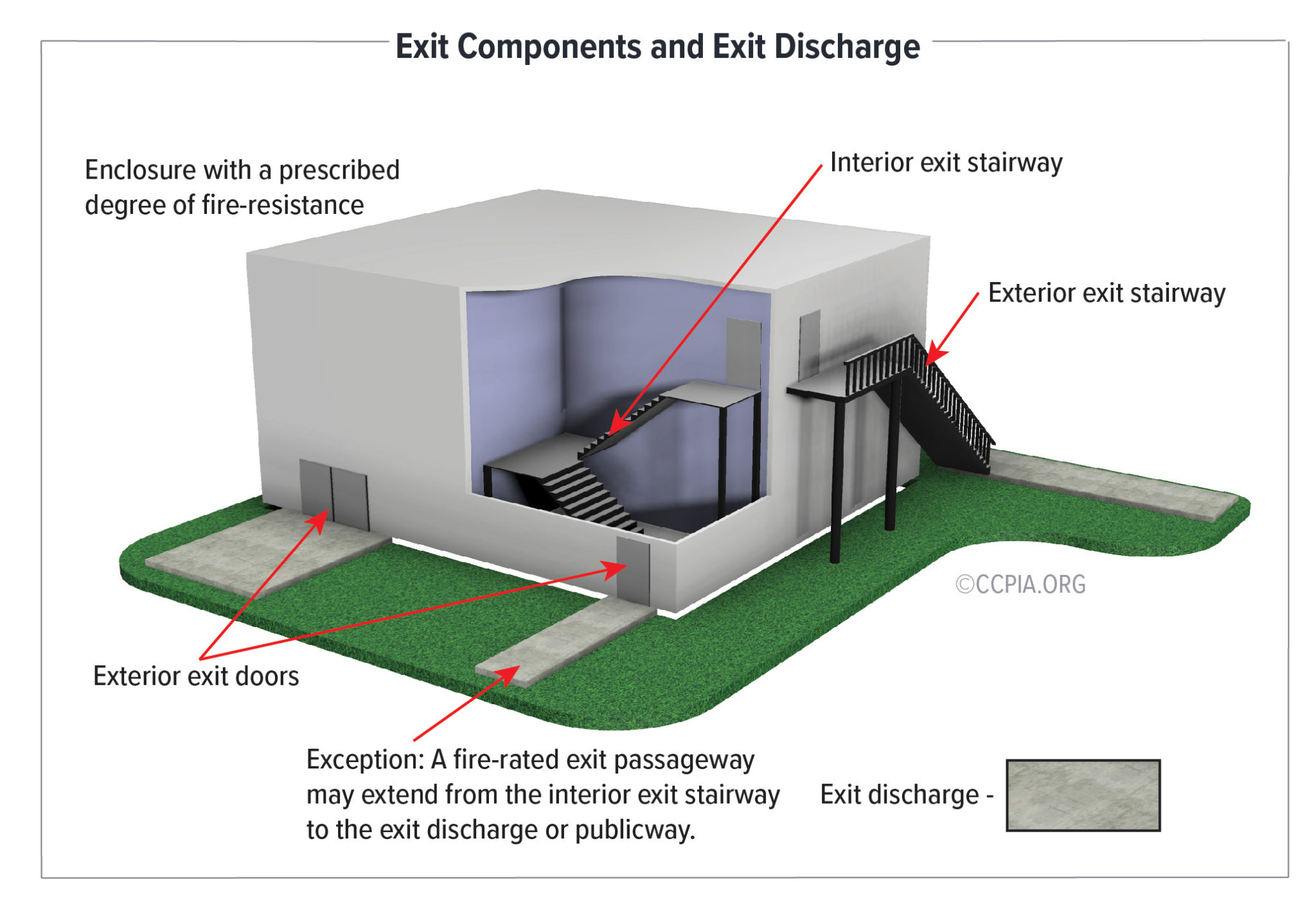
Throughout the inspection, ask yourself, “Can occupants evacuate safely without hindrance during an emergency?” The answer depends on multiple factors, including whether obstructions are present along the means of egress and whether exit signage, directional signage, and emergency lighting are in place. Although there are a few exceptions, there should be at least two exits to the outside, or one exit with a maximum travel distance of 75 feet (22.86 m).
Off the means of egress path, there are additional fire and life safety elements to account for, though noting obstructions or trip hazards remains a key consideration throughout. Check that fire extinguishers and other fire protection features have current AHJ tags and are not tampered with or missing.
Fire doors are designed to compartmentalize smoke and flames and prevent the rapid spread of fire throughout a building. Check that they are not wedged open or compromised in any way that undermines their purpose. When inspecting stairways, refer to the CCPIA® checklist to ensure they are constructed and maintained to provide safe egress.
The complexity of a building’s fire and life safety design varies by building use. The video and key highlights summarized serve as a baseline for the inspection scope and procedure. Learn more by taking the Inspecting Commercial Fire and Life Safety Systems Online Course, a self-paced course covering means of egress, fire protection systems, inspection checklists, and more.