


During commercial property inspections, retaining walls are often found at parking lots, along property boundaries, and where changes in site elevation create access to lower levels. Some walls serve only to retain soil, while others are integrated with stairways, ramps, or tiered landscape features. They range from large structures that span long distances and support significant changes in grade to smaller site walls used around building perimeters, service areas, or walkways.
This article reviews common types of retaining walls, inspection techniques, and common deficiencies. To learn more about inspecting retaining walls, take the self-paced Inspecting Commercial Building Exteriors Online Course.
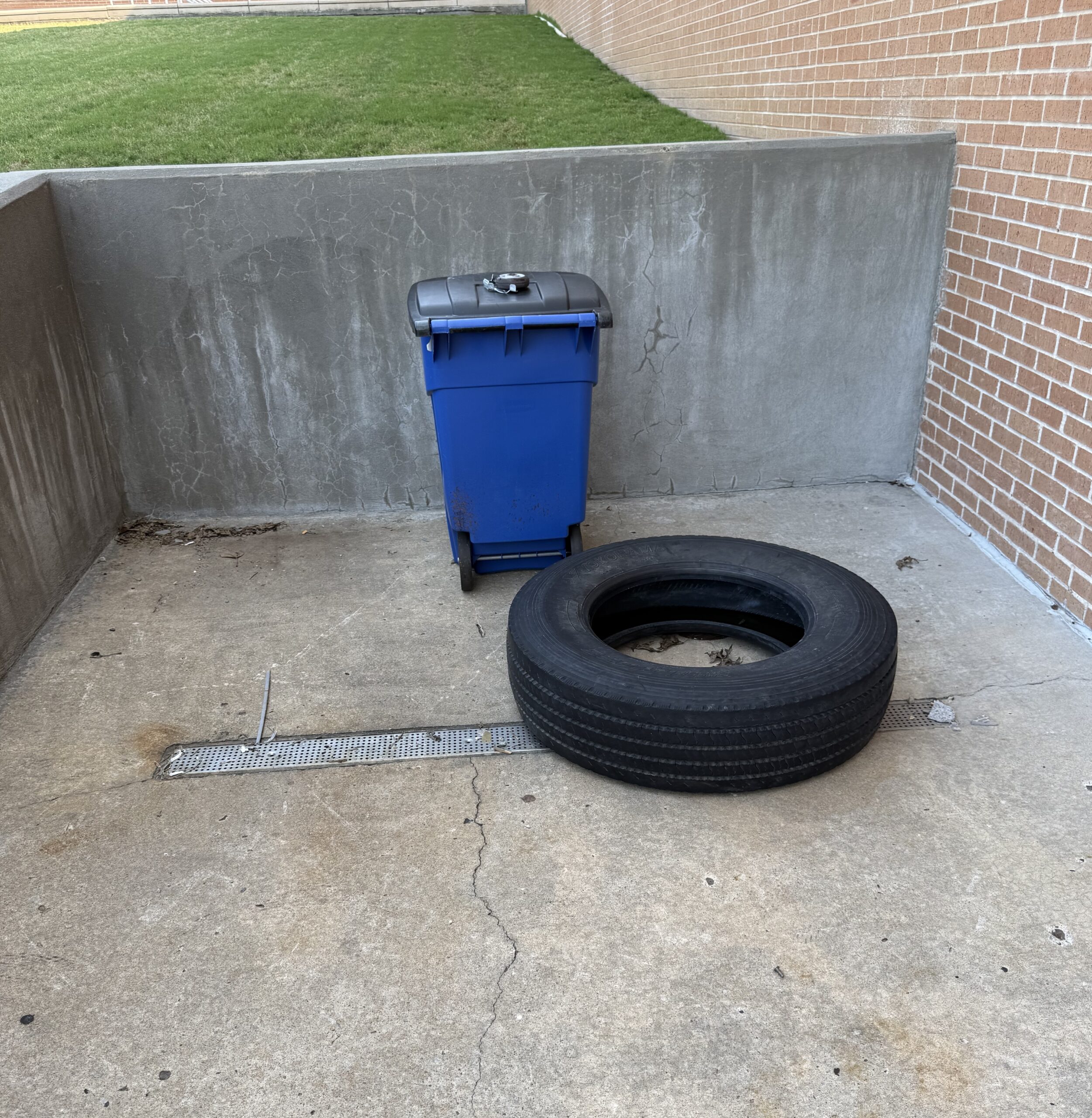
Retaining wall at service area, supporting higher grade along the building perimeter
Common Types of Retaining Walls
Retaining walls are installed to manage changes in site topography and are designed to hold back soil and prevent erosion on a slope or uneven surface. The way they achieve this depends on whether gravity alone is sufficient or whether additional supporting materials are required. For this reason, inspectors will typically encounter either a gravity retaining wall or reinforced retaining wall.
Gravity Retaining Wall
Gravity retaining walls are designed to hold back soil primarily through their own weight without additional reinforcement. These are often shorter walls constructed of poured concrete, concrete blocks, rock, boulders, or gabion systems. Most gravity walls are built with a slight backward slope, leaning toward the soil they are retaining. These walls typically do not include visible reinforcement. Although a concrete retaining wall may be reinforced internally with steel, it is not considered a reinforced retaining wall system unless it uses structural elements that extend and anchor into the surrounding soil.
Reinforced Retaining Wall
Reinforced retaining walls are often associated with taller walls or walls that must hold back larger volumes of soil or additional loads. These walls include some form of structural attachment to the soil to improve stability and resist movement, such as tiebacks, deadmen, or piles. Common construction materials include timber and poured concrete.
Wooden or timber retaining walls may be easiest for the inspector to determine whether reinforcement is present. Seeing a shift from the horizontal grain to an exposed end grain is an indication that a deadman or tie-back is present. Concrete retaining walls are more difficult to classify visually, as deadmen or tiebacks are often buried perpendicularly behind the wall, extending into the retained soil.
Inspection Approaches
The baseline scope of the ComSOP is to inspect retaining walls when they are likely to adversely affect the structure. The two primary inspection approaches involve changing the viewpoint through a macro and micro lens and assessing stability through a plumb, level, square, and straight lens.
Structural Stability
Plumb, level, square, and straight (PLSS) is an inspection approach for visually assessing structural stability.
- Plumb: Looking for vertical alignment along the full height of the wall.
- Level: Looking at horizontal components for unevenness or deflection.
- Square: Looking for walls that are slanted inward or outward.
- Straight: Looking down the length of a wall to identify bows, waves, or irregularities
Macro and Microviewpoints
This inspection approach is a systematic combination of viewpoints used to gain greater context of structural issues and assess the severity of observed conditions.
- Micro Viewpoint: Assessing the structure from close proximity.
- Macro Viewpoint: Assessing the structure from a distance for a wide view.
Using both approaches during a retaining wall inspection can lead to a condition appearing as a defect up close until stepping back and seeing it from a broader perspective. Refer to the Retaining Wall Inspection video for an example of these approaches applied when assessing cracks.
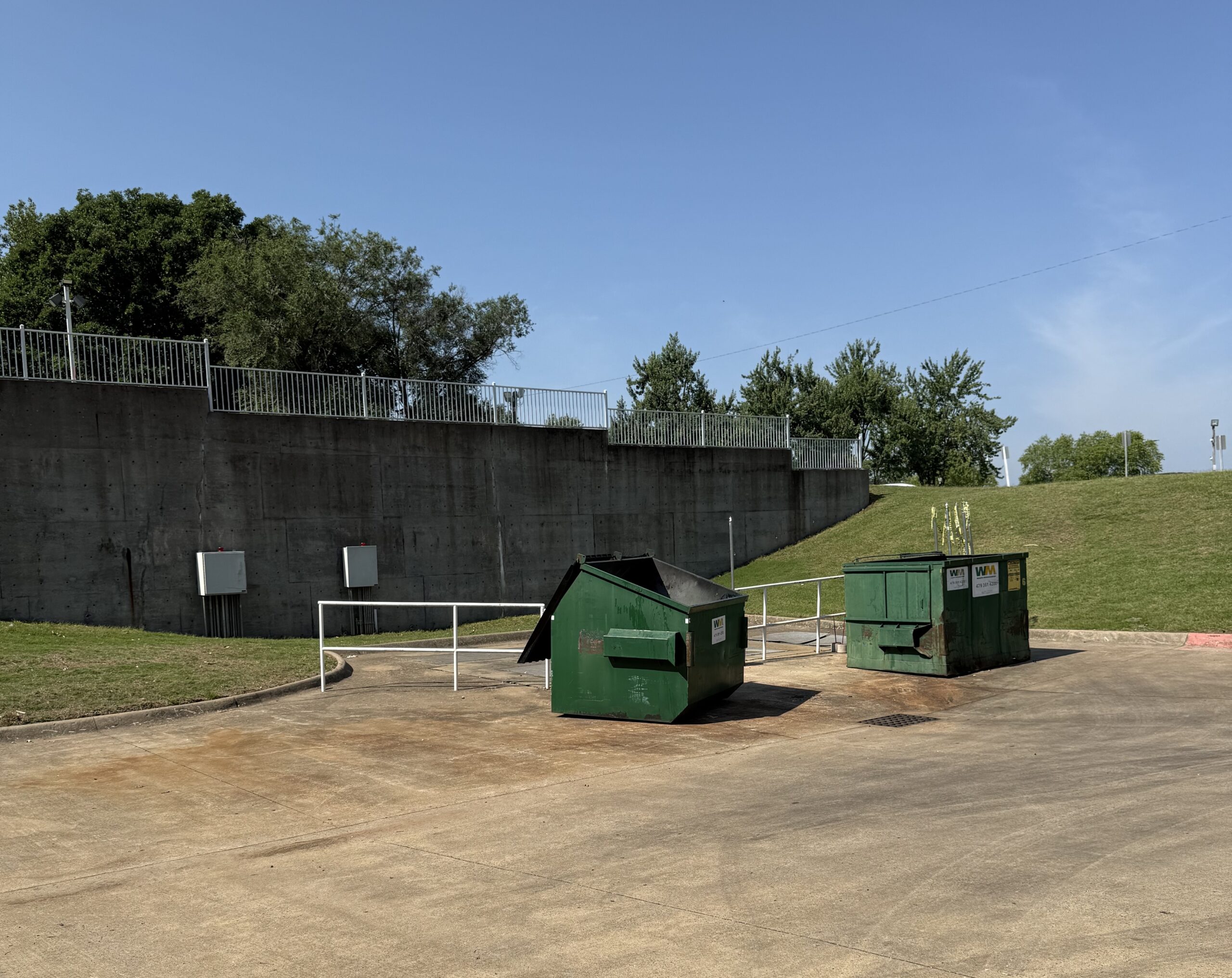
Macro view of retaining wall
Common Deficiencies
Retaining walls can experience a variety of issues that may develop over time. The following three conditions may indicate underlying issues that can compromise structural stability if left unaddressed.
Settling
A stable retaining wall relies on properly supported soil behind it. When the backfill settles or shifts, the surface above may dip or slump, placing added stress on the wall. Uneven grades, depressions, or separation near the top of the wall may indicate settlement or loss of support. These conditions should be noted, as ongoing movement can affect the wall’s stability over time.
Improper Drainage
The drainage system is typically made up of holes placed along the base or slightly above the base that allows any trapped moisture to freely escape from behind the wall. Some walls may have French drains or other accepted methods of de-watering installed behind the wall.
Just as overwatering a plant can drown it, water trapped behind the wall can lead to build pressure. Clogged holes, blocked pipes or compacted backfill can prevent water from escaping, saturating the soil and leading to material deterioration. Standing water, erosion, or signs of moisture should be noted as these may indicate inadequate drainage.
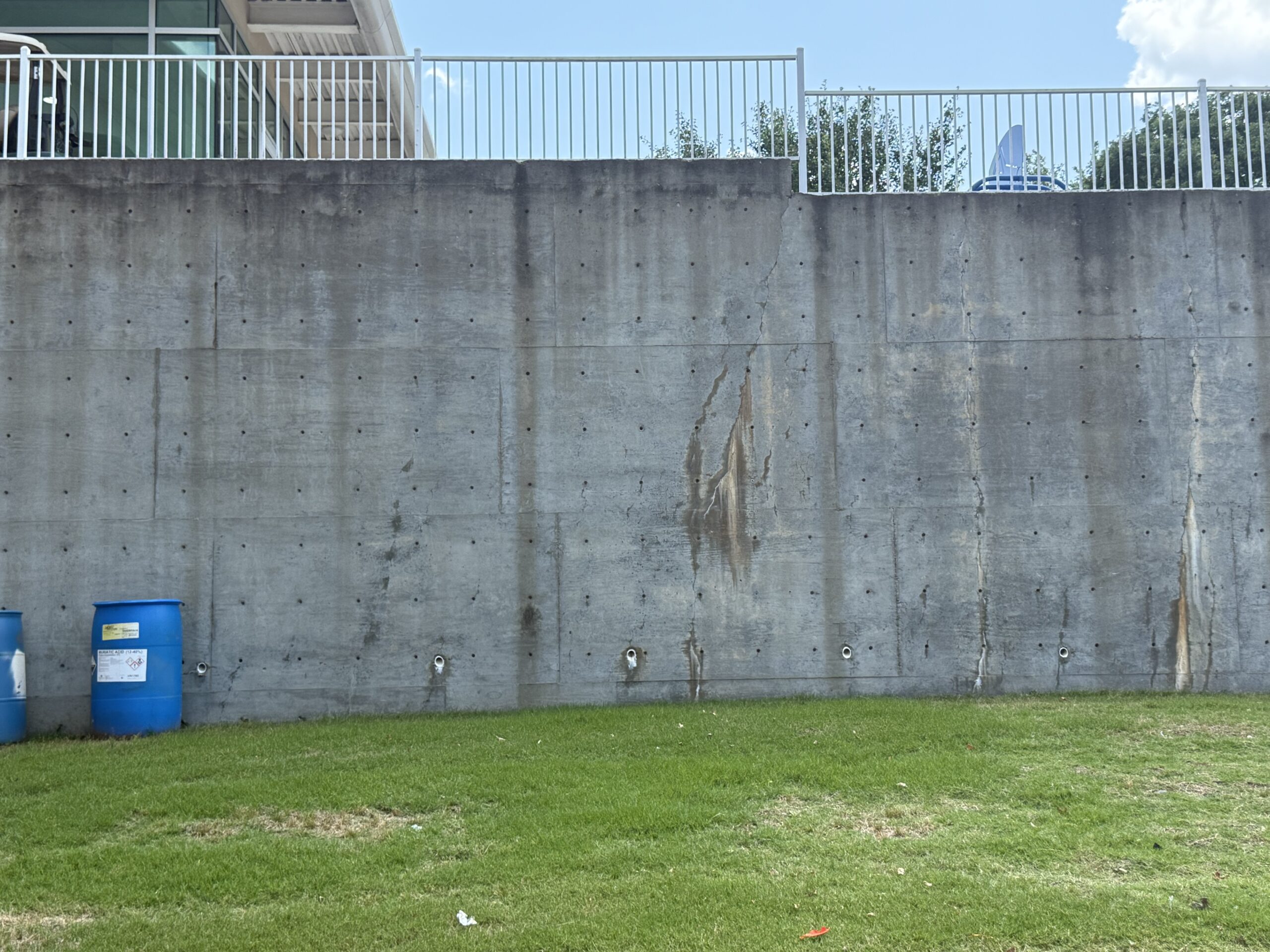
Retaining wall with PVC drain outlets at the base and vertical cracking with no visible movement observed
Cracking
Cracks may be present from settlement, soil movement, or other forms of stress. The three common types to be aware of include:
- Vertical Crack: A crack that runs up and down the wall. These should be evaluated for signs of movement, such as widening at the top or bottom. Concrete commonly develops vertical cracks, and a crack without evidence of movement may be less concerning but should still be documented.
- Horizontal Crack: A crack that runs up and down the wall. These should be evaluated for signs of movement, such as widening at the top or bottom.
- Stair-step Crack: A stepped crack pattern commonly seen in masonry or block walls. This type of cracking may indicate movement or stress within the wall and should be evaluated in context with other observed conditions.
In any case, inspectors should document the presence of any wide and extensive cracks present. Other potential issues include leaning or bulging walls, separation of segments, material deterioration, and clogged drainage.
Inspecting retaining walls requires a thorough understanding of inspection techniques, construction practices, and common deficiencies. For example, a retaining wall that appears out of plumb during visual assessment, combined with settlement observed in the soil behind it, may indicate deficiencies related to wall design or backfill support and be considered to adversely affect the structure. When observed, such conditions should be documented and may warrant further evaluation.
Additional Resources for Commercial Property Inspectors: