


An outbuilding is a detached, accessory structure located on the same parcel as a main building. It provides supplemental space for storage, services, or operations and is not intended for primary occupancy or use. Some outbuildings are fully equipped with Mechanical, Electrical, and Plumbing (MEP) systems, while others are solely used for storage and lack power or conditioned air.
Common outbuilding uses include storage garages at warehouses, equipment or machinery sheds at agricultural properties, and maintenance buildings or bus garages at schools. In some cases, an outbuilding may be leased to a separate tenant, as shown in the recreational facility outbuilding inspection video. This affects inspection confidentiality. Inspectors should confirm whether the tenant is aware of the inspection or if access and activities should remain confidential while onsite.
Learn how to identify, assess, and navigate outbuilding inspections in the self-paced Inspecting Commercial Building Exteriors Online Course. Included with membership. Earn your certification upon completion.
Inspection Scope
The baseline scope of the ComSOP excludes outbuildings. During the preliminary research phase and client conversations, inspectors should gather details about the outbuilding’s complexity and confirm whether the client would like it inspected, then adjust the scope in the proposal and agreement accordingly.
Before the inspection, inspectors should consider clarifying:
- Current use of the outbuilding and occupancy status
- Scope of inspection if included (i.e., full scope or exterior-only)
- Points of contact for access or potential inspection confidentiality requirements
- Whether the outbuilding is supplied with utilities (i.e., electrical, water, fuel, conditioned air)
These details help inspectors determine how much time and effort will be required to perform the outbuilding inspection and cover the details in the final report.
Reporting Practices
If the baseline scope is expanded and the outbuilding is included in the inspection, inspectors must determine their reporting approach, such as:
- Creating a stand-alone inspection report for the outbuilding
- Producing one report for the entire property, with the outbuilding inspection details added as a separate section or as an appendix attachment
Reporting approaches may vary depending on client preferences and the inspection scope specifically for the outbuilding. Outbuildings that are regularly occupied and fully equipped with utilities may warrant a separate report or an appendix attachment approach. More limited scopes, such as exterior-only inspections, may be better included as a separate section within the body of a report.
Field Modifications
The use and occupancy status of an outbuilding often influences how it is modified over time. When an outbuilding is repurposed from its original design, equipment and system-related field modifications are common. Field modifications are changes made to a structure after construction, or to its systems after manufacture or installation.
For example, an outbuilding originally intended for storage may later be converted into a breakroom for maintenance staff or a mechanic shop. As a result, building systems are often added or altered to support occupancy and equipment use.
Examples include:
- Added electrical outlets or flexible cords used improperly as substitutes for permanent wiring
- Plumbing fixtures added without proper traps or backflow prevention
- Improperly terminated equipment exhaust or missing exhaust ventilation
- Improvised wall penetrations for exhaust, fuel lines, or drainage piping
These conditions can affect safety, structural integrity, and long-term reliability. Inspectors should document observed modifications and consider whether any hazards are present that warrant further attention.
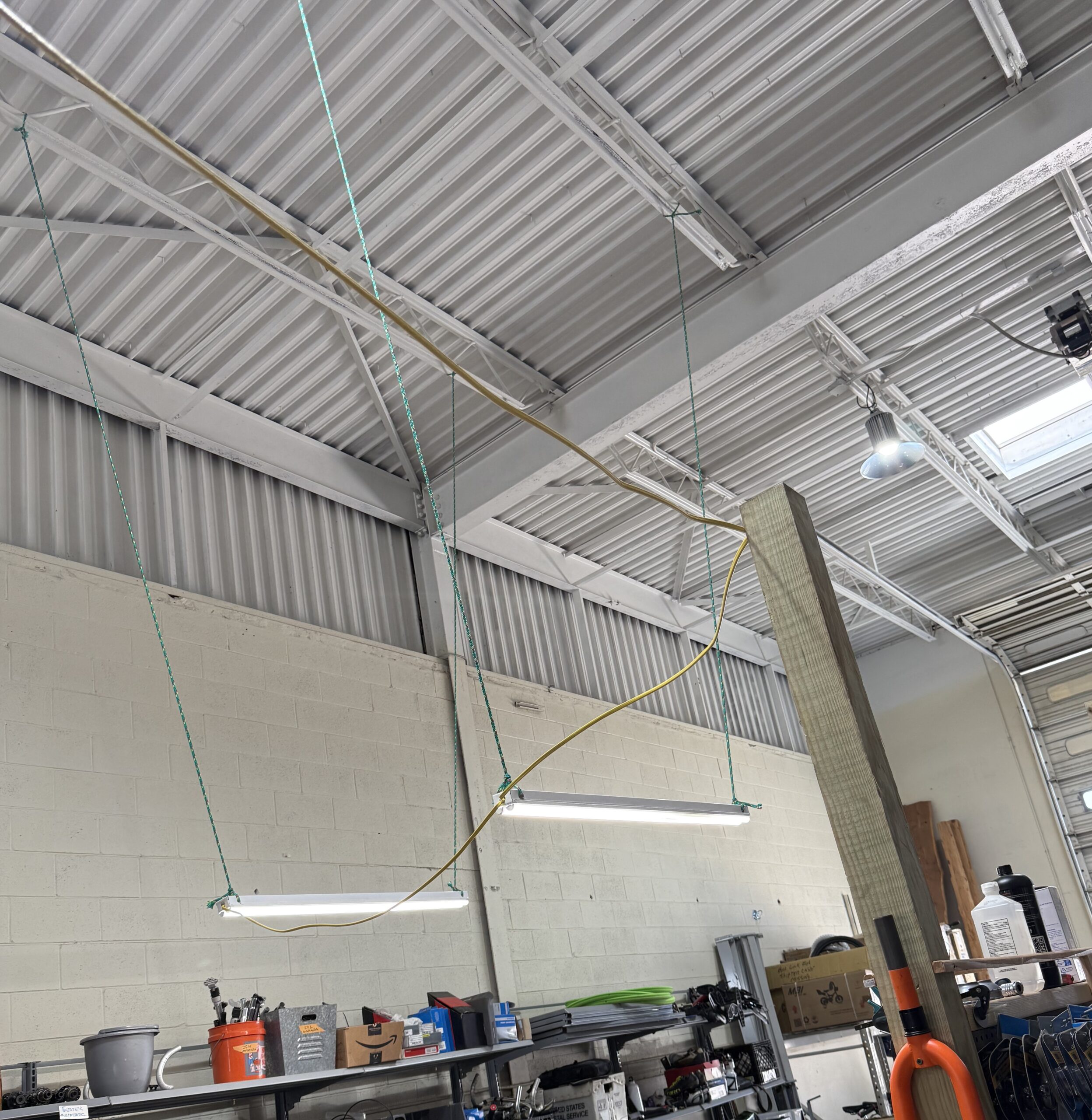
Flexible cords used in place of fixed wiring
Utility Services
Outbuildings may or may not be supplied with utilities. When utilities are present, they may be connected to the main building’s services or provided through separate service lines or meters.
- Gas. Check for an accessible shutoff valve. Look near any visible pressure regulators.
- Electrical. Look for a separate service drop or lateral, proper grounding, and accessible disconnects.
- Water. Look for proper backflow prevention for the utility’s water supply protection and at the fixture-level. Identify the location of any shutoff valves.
Inspection scope will vary depending on how utilities are designed to serve the outbuilding. Some outbuildings function as separate buildings with dedicated shutoffs for safety and maintenance purposes. Some may also have dedicated meters for water, gas, and electrical. The Consistent Procedures for Multi-Building Layouts video guide explains how to break down inspection complexity by tracing utility equipment from the source to the service entrance and then to downstream equipment. This process can also be used for other utility services.
The photos below show the main gas meter for the property and an outbuilding behind it. A gas pressure regulator and shutoff valve were located at the outbuilding. An electrical service drop, meter, and disconnect were also present at the building but are not shown below.
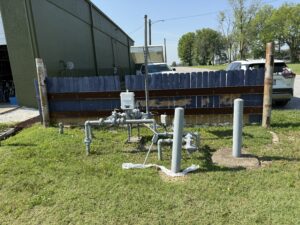
Main gas meter for the property and an outbuilding behind it
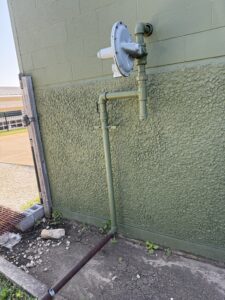
Pressure regulator and shutoff valve for gas
Additional Inspection Considerations
Since outbuildings often serve as storage spaces, another important consideration is the proper storage of hazardous materials and maintaining safe clearances from life safety features and building systems. Additionally, outbuilding roofs often lack a permanent means of access, which requires inspectors to clarify whether a drone inspection will be included or if the roof will only be inspected from the ground. The scope of an outbuilding inspection should ultimately be agreed upon in writing between the inspector and client to ensure proper alignment with the client’s risk tolerance and inspection objectives.
Conclusion
Outbuildings can vary widely in use, size, and system complexity. Some function as simple storage structures, while others operate as fully equipped workspaces with utilities and regular occupancy. Because of this variability, outbuildings are excluded from the baseline ComSOP and require advance discussion to determine whether they should be included in the inspection scope.
Gathering key details early, such as current use, occupancy status, utility services, access requirements, and reporting preferences, helps inspectors plan appropriately and avoid scope gaps or access issues. Clarifying expectations ahead of time supports accurate proposals, efficient inspections, and reporting that aligns with client needs and property conditions.
Additional Resources for Commercial Property Inspectors: