
In this video, we demonstrate a restaurant property inspection. It reviews the complete inspection process, including utility services, the building envelope, stairways, and mechanical systems. Unlike a typical office or retail property, a restaurant introduces specialized cooking equipment and fire and life safety factors that inspectors must consider. Below are key highlights for the unique factors involved in commercial kitchen inspections.
Note that Section 6.5.13 of the International Standards of Practice for Inspecting Commercial Buildings (ComSOP) outlines the inspection points specific to cooking areas. The remainder of Section 6 covers other building systems and components. Referring to the ComSOP throughout the video can help you become familiar with the baseline inspection scope and the technical knowledge needed to perform an inspection.
Mechanical Equipment
Commercial cooking operations that produce grease-laden byproducts require specialized mechanical equipment to capture and exhaust them. Part of the inspection is assessing whether these systems are properly installed and maintained. This includes checking for grease buildup or leakage, properly installed baffle filters that allow grease to drain, and grease collection components that are in place and maintained.
The primary mechanical components include:
- Make-Up Air Unit: Supplies outdoor air to replace air exhausted from the kitchen. Proper make-up air helps maintain balanced air pressure and allows exhaust systems to operate effectively. Make-up air may be filtered only or conditioned through heating and/or cooling before entering the building.
- Exhaust Fan: Creates airflow that pulls heat, smoke, grease-laden vapors, odors, moisture, and other cooking contaminants through the hood and duct system and exhausts them to the exterior. Exhaust terminations should be located where they do not create a public nuisance or hazard.
- Type I Exhaust Hood: Captures grease-laden vapors, smoke, heat, and other cooking contaminants and helps remove grease before the air enters the exhaust duct system. Air entering the hood passes through baffle filters, where grease is captured and drains into a trough and grease cup. The filtered air then travels through the duct system and is exhausted to the building’s exterior by the exhaust fan.
Kitchen exhaust ducts should not appear to be interconnected with other ventilation systems or improperly pass through fire-rated assemblies. This helps prevent grease, smoke, heat, and fire from spreading to other areas of the building.


Fire and Life Safety
Commercial cooking operations that produce grease-laden byproducts also require specialized fire and life safety systems and components. Inspectors should verify that these systems are present, readily accessible, free of grease buildup, and appear properly maintained. These components typically require periodic AHJ inspection and servicing, so check for current inspection or service tags.
Key components include:
- Fire Suppression System: Installed within all Type I exhaust hoods. It triggers a chemical suppressant that is formulated to smother and cool down burning oils. The system consists of drop-down tubes and nozzles located under the hood, a canister or cabinet providing the suppression chemicals, and a manual actuator on the wall.
- Manual Actuator: Also referred to as a “pull station,” it provides a way to manually activate the kitchen fire suppression system. It should be readily accessible along the path of egress from the cooking area. Check that it’s mounted 42-48 inches above the floor and located approximately 10-20 feet from the cooking equipment.
- Type K Fire Extinguisher: A portable fire extinguisher designed for fires involving combustible cooking media, such as animal fats and vegetable oils. Type K extinguishers are required in commercial cooking areas where these types of cooking media are used and within a 30-foot travel distance of applicable cooking equipment.
Plumbing System
Commercial kitchens generate wastewater containing grease, food waste, and other contaminants that can affect the building’s plumbing system and potable water supply. Specialized plumbing components help manage this wastewater, prevent blockages, and protect against cross-contamination.
Key components to inspect include:
- Grease Traps and Interceptor: Mitigates fats, oils, grease, and food waste from entering the building’s drainage system. They may be larger units located underground outside and identified by access lids in the flatwork, or smaller devices located under specific fixtures.
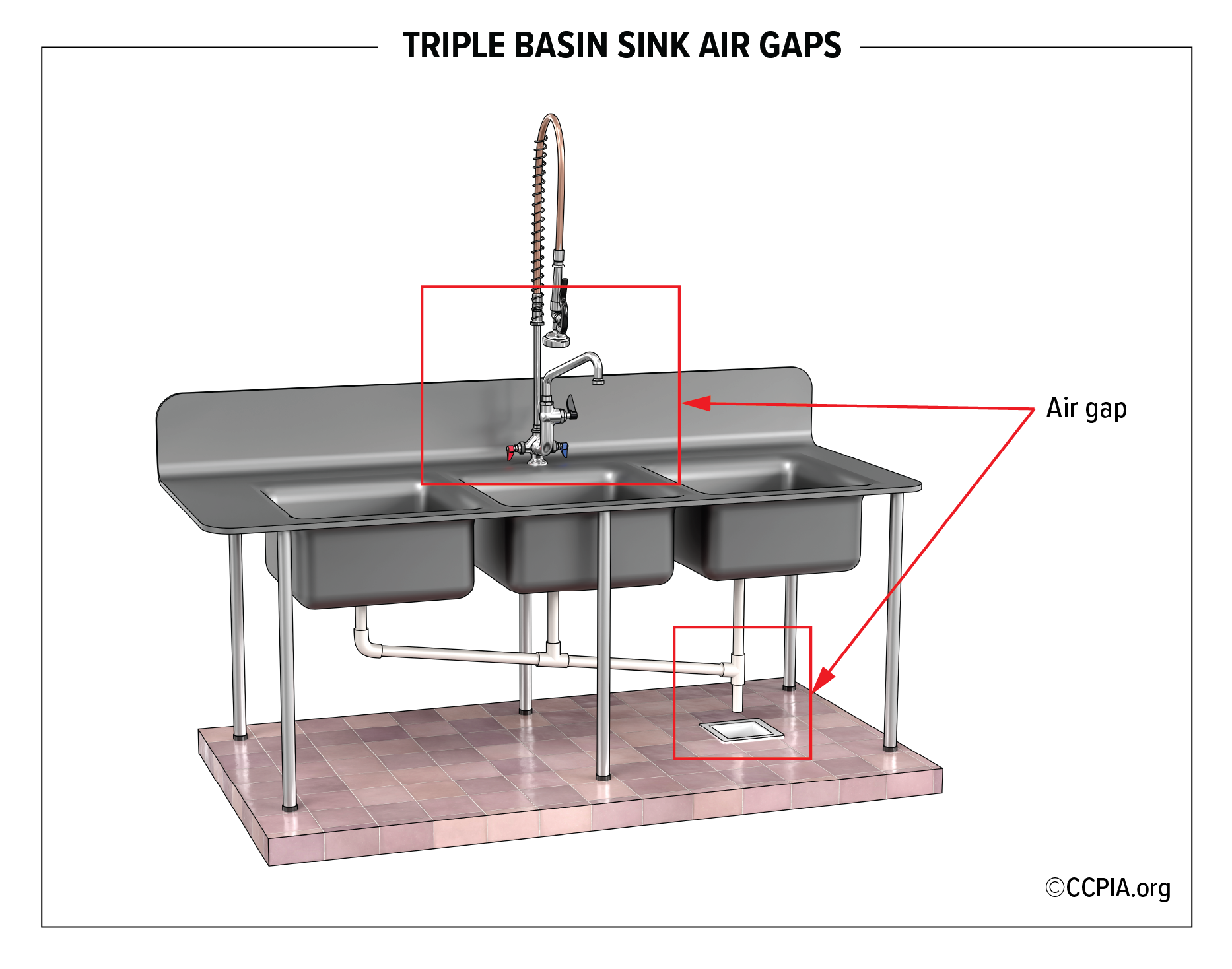
- Indirect Drain: Prevents cross-contamination between wastewater and equipment or fixtures used for food handling, storage, preparation, and processing. It uses an air gap between the equipment or fixture’s drain piping and the floor drain.

Restaurants and other commercial properties with cooking operations, such as hotels, event centers, and catering facilities, require inspectors to understand fire and life safety and how those principles apply specifically to cooking areas.
The Fire and Life Safety Inspection Online Course provides a foundation for inspecting these systems and building design practices across commercial properties, while the Inspecting Commercial Kitchens Online Course focuses on the specialized equipment, systems, and hazards associated with commercial cooking operations. Training in both is essential for inspecting these facilities.